Why International Peace Remains the World’s Most Urgent Human Right
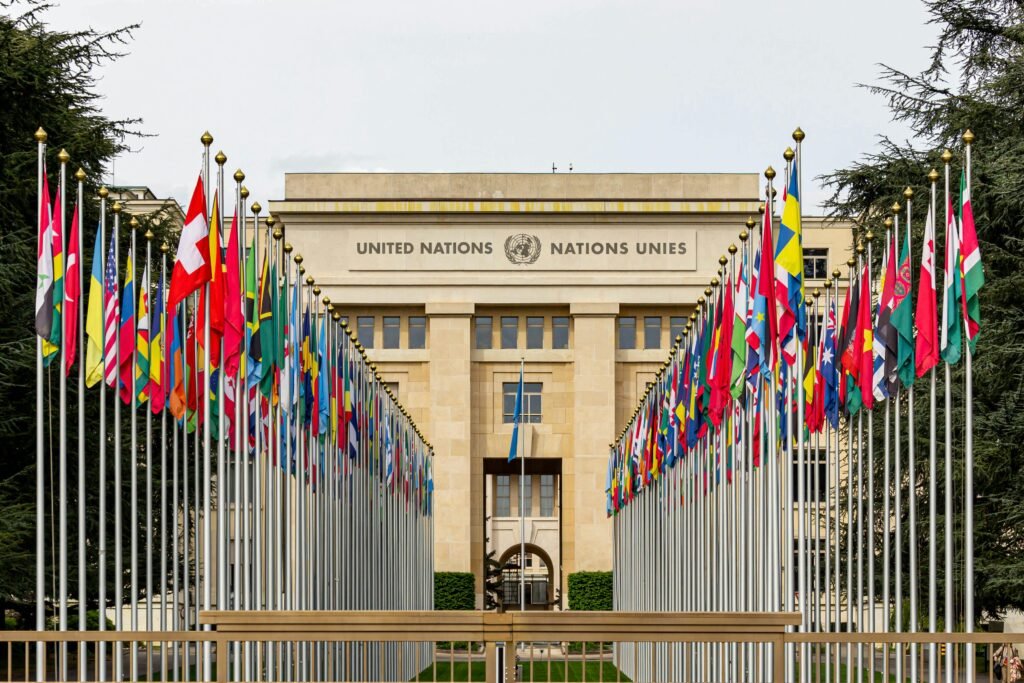
At its core, international peace is not merely a political aspiration — it is a fundamental human right. Without peace, no other right can be meaningfully exercised. The right to life, liberty, education, health, and dignity all crumble under the weight of armed conflict, occupation, and systemic violence. The architects of the post-World War II world understood this with devastating clarity. Having witnessed two catastrophic global wars in less than thirty years, they forged an instrument that remains, to this day, the backbone of the international legal order: the Charter of the United Nations.
The UN Charter, signed on 26 June 1945 and entering into force on 24 October 1945, was a revolutionary document. It sought to spare humanity from the “scourge of war” and anchored the maintenance of international peace and security as the primary purpose of the newly established United Nations. More than eight decades later, the world looks very different — yet the questions raised by the Charter are more urgent than ever. Is the UN fulfilling its mandate? What has it achieved? Where has it failed? And crucially, what must it do differently going forward?
This article examines these questions through the lens of human rights, international law, and the lived realities of people caught in the crossfire of today’s conflicts.
The UN Charter and International Peace: The Legal Framework
Article 1: The Foundational Purpose
The very first article of the UN Charter establishes international peace and security as the organisation’s primary objective. Article 1(1) states that the purposes of the United Nations include:
“To maintain international peace and security, and to that end: to take effective collective measures for the prevention and removal of threats to the peace, and for the suppression of acts of aggression or other breaches of the peace.”
This language is not symbolic. It creates binding obligations and a structural framework through which member states delegate authority to act collectively in defence of global peace.
Chapter VI: The Pacific Settlement of Disputes
Chapter VI of the Charter (Articles 33–38) lays out a hierarchy of peaceful conflict resolution mechanisms. Parties to a dispute are required, first and foremost, to seek resolution through negotiation, enquiry, mediation, conciliation, arbitration, judicial settlement, or resort to regional agencies — before escalating to the Security Council.
This chapter embodies the principle that international peace is best maintained through dialogue, not force. It reflects a deeply human rights-consistent philosophy: that sovereign peoples deserve the chance to resolve their differences without bloodshed.
Chapter VII: Action with Respect to Threats to Peace
If Chapter VI represents the diplomatic face of international peace, Chapter VII (Articles 39–51) is its enforcer. This chapter grants the UN Security Council sweeping powers to determine the existence of a threat to peace, a breach of peace, or an act of aggression, and to authorise:
- Non-military measures (Article 41): Economic sanctions, severance of diplomatic relations, and other coercive non-armed measures.
- Military measures (Article 42): If non-military measures are inadequate, the Council can authorise use of armed force.
Article 51 also preserves the inherent right of individual or collective self-defence — a critical balance between collective security and state sovereignty.
The Human Rights Provisions: Chapters I and IX
The Charter is not solely a security document — it is also a human rights instrument. Article 1(3) includes among the UN’s purposes:
“To achieve international co-operation in solving international problems of an economic, social, cultural, or humanitarian character, and in promoting and encouraging respect for human rights and for fundamental freedoms for all without distinction as to race, sex, language, or religion.”
Chapter IX (Articles 55–60) further commits the UN to promoting higher standards of living, full employment, and universal respect for human rights. Crucially, Article 55 recognises that international peace cannot be durable without social justice and human dignity — a connection that human rights advocates have championed ever since.
This linkage is not incidental. The Charter’s framers understood that poverty, discrimination, and political exclusion breed the conditions in which war flourishes. Peace, in this framework, is not merely the absence of armed conflict but the presence of justice.
Contemporary Examples: International Peace Under Threat
1. The Russia-Ukraine War: The Security Council’s Paralysis
Perhaps no contemporary crisis better illustrates the structural limitations of the UN’s peace architecture than the ongoing war in Ukraine. When Russia launched its full-scale invasion on 24 February 2022, the UN Security Council — the body charged with maintaining international peace — was immediately deadlocked. Russia, as a permanent member of the Council, exercised its veto power to block any binding resolution condemning or halting the invasion.
This is the Charter’s deepest internal contradiction: the very states most likely to threaten international peace are the ones holding veto power over the Council’s response. The UN General Assembly stepped in with an overwhelming emergency resolution condemning the invasion — but General Assembly resolutions are non-binding, carrying moral authority but no enforcement mechanism.
From a human rights perspective, the consequences have been catastrophic. The UN Human Rights Monitoring Mission has documented tens of thousands of civilian casualties, widespread displacement of over 10 million people, and systematic violations including unlawful strikes on civilian infrastructure — violations of both the Geneva Conventions and core human rights norms.
2. The Gaza Crisis: Humanitarian Law and Accountability Gaps
The conflict in Gaza that intensified following the Hamas attacks of 7 October 2023 has confronted the international community with harrowing questions about the boundary between self-defence under Article 51 and the obligations of international humanitarian law. The scale of civilian death, displacement, and destruction of civilian infrastructure prompted UN agencies, Special Rapporteurs, and the International Court of Justice (ICJ) to issue urgent calls for ceasefire and accountability.
Again, Security Council action was hampered by the veto power, with the United States blocking several resolutions calling for an immediate ceasefire. The episode underscores a central tension in the UN’s peace architecture: the gap between the Charter’s promise of collective security and the political realities of great power competition.
3. Sudan: A Forgotten Crisis
While the world’s attention focused elsewhere, Sudan descended into one of the worst humanitarian catastrophes of the 21st century. The civil war between the Sudanese Armed Forces (SAF) and the Rapid Support Forces (RSF), which erupted in April 2023, has resulted in mass atrocities, famine conditions, and the world’s largest displacement crisis — with over 10 million people internally displaced as of 2024-2025.
The UN’s response in Sudan has been sluggish and under-resourced, illustrating a persistent challenge: the politics of international peace often sideline crises where powerful states have fewer strategic interests.
4. The Afghan People: Peace Without Rights
Afghanistan under Taliban rule since 2021 presents a different dimension of the international peace challenge. While the guns of conventional war fell largely silent, structural violence — particularly the systematic erasure of women’s rights, including bans on education, employment, and public life — has generated a different kind of peace: one built on oppression rather than justice. The UN Special Rapporteur on Human Rights in Afghanistan has described the situation as tantamount to “gender apartheid.”
This case powerfully demonstrates that international peace, to be meaningful, must be inseparable from human rights protection. A peace that silences half its population is not peace — it is repression with a quiet face.
5. Myanmar: The Failure of the Responsibility to Protect
The military coup in Myanmar in February 2021 and the subsequent campaign of violence against civilians — including airstrikes on villages, the use of civilians as human shields, and mass atrocities against ethnic minorities — revived agonising debates about the Responsibility to Protect (R2P) doctrine. The R2P, adopted at the 2005 World Summit, holds that the international community has a responsibility to protect civilians from genocide, war crimes, ethnic cleansing, and crimes against humanity when their own government fails to do so.
Yet in Myanmar, as in many before it, geopolitical considerations — particularly China and Russia’s positions — prevented the Security Council from authorising decisive protective action. The gap between the Charter’s promise and R2P’s aspiration, on one hand, and the Council’s actual conduct, on the other, remains a defining failure of the international peace architecture.
The UN’s Successes: Where International Peace Has Held
It would be both unfair and inaccurate to assess the UN’s record without recognising its genuine achievements in maintaining international peace and security.
Peacekeeping Operations
UN peacekeeping operations — authorised under Chapter VI and increasingly Chapter VII — have played a critical stabilising role in numerous post-conflict societies. From Namibia (1989–1990) to Timor-Leste (1999–2002), from Sierra Leone to Liberia, UN missions have helped consolidate ceasefires, protect civilians, and create the conditions for democratic transitions.
As of 2025, UN peacekeeping missions operate in contexts including the Democratic Republic of Congo (MONUSCO), Mali (MINUSMA, now concluded), South Sudan (UNMISS), Lebanon (UNIFIL), and others — involving approximately 87,000 uniformed personnel from over 120 contributing countries.
Nuclear Non-Proliferation and Disarmament
The UN has been instrumental in building the global architecture of nuclear non-proliferation. The Nuclear Non-Proliferation Treaty (NPT, 1968) — negotiated under UN auspices — remains the cornerstone of efforts to prevent the spread of nuclear weapons. The International Atomic Energy Agency (IAEA), which works closely with the UN, provides verification and safeguards. The recent Treaty on the Prohibition of Nuclear Weapons (TPNW, 2021) — the first legally binding international instrument to comprehensively prohibit nuclear weapons — was adopted through the UN General Assembly process.
The Prevention of Great Power War
Perhaps the UN’s most understated achievement is also its most significant: since 1945, there has been no direct military conflict between the great powers. While this cannot be attributed solely to the UN — nuclear deterrence, economic interdependence, and democratic governance are all factors — the existence of a multilateral forum for diplomacy, negotiation, and norm-setting has undeniably contributed to managing great power rivalries short of all-out war. Compared to the catastrophic cycle of world wars in the first half of the 20th century, this is a profound, if fragile, achievement.
Norm-Setting and International Human Rights Law
The UN has been the architect of the global human rights framework. From the Universal Declaration of Human Rights (1948) to the twin covenants on civil/political rights and economic/social/cultural rights (1966), to the Conventions on Torture, the Rights of the Child, the Rights of Persons with Disabilities, and many more — the UN has created the normative architecture within which international peace and human rights are understood as inseparable.
To What Extent Has the UN Been Successful?
An honest assessment requires acknowledging both what the UN has achieved and where it has fallen short.
The UN has largely succeeded in:
- Establishing a global norm against interstate aggression and war as a tool of policy
- Providing a universal forum for diplomacy and multilateral engagement
- Coordinating humanitarian response to conflicts and disasters through agencies like UNHCR, UNICEF, WFP, and OCHA
- Building international human rights law and holding states to account through treaty bodies and special procedures
- Supporting decolonisation and self-determination movements throughout the 20th century
- Maintaining peacekeeping operations that have saved countless lives in fragile states
The UN has significantly struggled with:
- Enforcing decisions when permanent members of the Security Council are involved or use their veto to shield allies
- Preventing mass atrocities and genocide (Rwanda 1994, Srebrenica 1995, Darfur 2003–ongoing)
- Addressing structural causes of conflict — poverty, inequality, resource competition, and climate-driven instability
- Ensuring accountability for international crimes, particularly for powerful states
- Adapting its architecture — designed for a world of sovereign states — to address non-state actors, transnational terrorism, and cyber threats
- Financing its peace operations adequately and equitably
The UN’s limitations are not a reason to abandon it — they are an argument for reforming it. As former UN Secretary-General Kofi Annan observed, the UN is only as strong as the will of its member states. The Charter creates the framework; political will must breathe life into it.
What Steps Can the UN Take to Further Promote International Peace?
Based on an expert analysis of international law, human rights practice, and contemporary conflict dynamics, several critical reforms and initiatives would significantly strengthen the UN’s capacity to promote international peace and security:
1. Reform the Veto Power in the Security Council
The most urgent structural reform is addressing the paralysing effect of the veto. Concrete proposals include:
- The ACT Code of Conduct: Supported by over 100 member states, this voluntary commitment would have permanent members refrain from using the veto to block action in cases of genocide, war crimes, and crimes against humanity. The P5 should formally commit to this code.
- Mandatory veto justification: Require that any P5 member using the veto must immediately convene an extraordinary session of the General Assembly to justify their action — creating political accountability where none currently exists.
- Expanding Security Council membership to better reflect the contemporary world, particularly by including permanent or semi-permanent representation from Africa, Latin America, and South Asia.
2. Operationalise the Responsibility to Protect
The R2P doctrine must be transformed from an aspirational principle into an operational commitment. This requires:
- Developing early warning systems that trigger graduated responses before crises escalate to mass atrocities
- Building regional capacities — particularly in the African Union, ASEAN, and the Arab League — to intervene preventively under UN authorisation
- Separating R2P responses from Security Council veto power in cases where atrocity crimes are clearly established
3. Strengthen UN Peacekeeping
To enhance the effectiveness of peacekeeping in promoting international peace:
- Peacekeepers should receive better training on the protection of civilians, gender-based violence response, and human rights monitoring
- Accountability mechanisms for peacekeepers who commit abuses must be strengthened — sexual exploitation and abuse by UN personnel have deeply damaged the UN’s credibility
- Mission mandates should be linked to clear political strategies and exit criteria, not open-ended deployments
4. Address the Root Causes of Conflict
Sustainable international peace requires addressing structural drivers of instability. The UN must:
- Integrate climate security into the Security Council’s work — climate change is now recognised as a threat multiplier for conflict in regions from the Sahel to South Asia
- Champion economic justice through the reform of international financial institutions (IMF, World Bank) to address the debt crises that destabilise fragile states
- Prioritise transitional justice mechanisms — truth commissions, reparations, and accountability processes — that allow post-conflict societies to build durable peace on the foundation of acknowledged truth
5. Empower Civil Society and Local Peacebuilders
The UN Peacebuilding Commission was created in 2005 precisely to bridge the gap between peacekeeping and long-term development. It remains chronically underfunded and under-utilised. The UN should:
- Dramatically increase the UN Peacebuilding Fund, which operates on a fraction of the budget of peacekeeping operations
- Create formal mechanisms for civil society and women’s organisations to participate in peace negotiations — evidence consistently shows that peace agreements involving women are more durable
- Support local dialogue and reconciliation processes that build peace from the ground up, not only through elite political bargaining
6. Invest in Preventive Diplomacy
Article 33 of the Charter calls for peaceful settlement of disputes before escalation — yet the UN’s preventive diplomacy capacity is vastly underfunded compared to its crisis response mechanisms. The Secretary-General’s Good Offices function must be strengthened with dedicated resources, enabling mediation and quiet diplomacy before conflicts ignite.
7. Regulate Emerging Threats: Cyber, AI, and Space
The UN Charter was drafted in an era of conventional warfare. The international peace architecture has not kept pace with cyberwarfare, autonomous weapons systems, and the militarisation of space — all of which pose grave risks to global stability. The UN must lead the development of new international norms and treaties governing:
- Cyber conflict — including prohibitions on attacks against civilian critical infrastructure
- Lethal autonomous weapons systems (LAWS) — establishing meaningful human control over life-and-death decisions in warfare
- Outer space militarisation — updating the 1967 Outer Space Treaty to address contemporary threats
The Human Rights-Peace Nexus: An Expert Perspective
From a human rights perspective, the most important insight embedded in the UN Charter — and frequently overlooked in security-focused discourse — is that international peace is not possible without justice. Article 55 of the Charter recognised this three-quarters of a century ago: stability grounded in oppression, poverty, and discrimination is not true peace.
This means that promoting international peace requires:
- Protecting human rights defenders who document abuses and advocate for accountability — they are the early warning system of conflict
- Ensuring gender equality in all peace processes — women’s meaningful participation in peace negotiations increases the probability of lasting peace by 35%, according to research by the Council on Foreign Relations
- Investing in the rule of law — states with independent judiciaries, functioning human rights institutions, and accountability for official misconduct are dramatically less likely to descend into conflict
- Protecting freedom of expression, press, and assembly — autocratic repression and information control consistently precede violent conflict
The UN’s own human rights machinery — including the Human Rights Council, Special Procedures (Rapporteurs and Working Groups), and the Universal Periodic Review — must be supported, insulated from political manipulation, and empowered to feed directly into peace and security decision-making.
Conclusion: The Unfinished Promise of International Peace
The UN Charter remains one of humanity’s most ambitious legal instruments. Its vision of international peace and security grounded in human rights, collective security, and peaceful dispute resolution was — and remains — radical in the best sense. It imagined a world where nations would subordinate narrow self-interest to the collective good; where the strong would be accountable to rules as much as the weak; and where peace would be understood not as silence, but as justice.
The gap between that vision and contemporary reality is wide. The veto continues to shield aggressors. Civilian populations continue to bear the heaviest costs of armed conflict. Climate change and great power competition are generating new threats the Charter’s architects could not have foreseen.
Yet the alternative — abandoning multilateralism — offers only worse outcomes. A world without the UN would be a world of unchecked power, no shared norms, and no forum for the peaceful resolution of disputes. The task for human rights advocates, legal scholars, civil society, and progressive governments is not to discard the Charter, but to hold its signatories to its promises.
International peace is both a right and a responsibility. It is a right that belongs to every person on earth — to the child in a Gaza hospital, to the woman in Kabul denied an education, to the farmer in Sudan who has fled his land, to the refugee navigating the Mediterranean. And it is a responsibility that falls on states, international institutions, civil society, and each of us who believes that law, dignity, and solidarity must ultimately prevail.
The UN Charter gave the world a framework. The work of filling it with meaning — of making international peace real — continues.
Key Takeaways
- The UN Charter (1945) establishes international peace and security as the organisation’s primary purpose, reinforced through Chapters VI, VII, and the human rights provisions of Chapters I and IX.
- Contemporary conflicts in Ukraine, Gaza, Sudan, Myanmar, and Afghanistan illustrate both the urgency of the UN’s mandate and the structural limitations — particularly veto power — that hamper its response.
- The UN has achieved significant successes: no great power war since 1945, a robust international human rights framework, and peacekeeping operations that have saved millions of lives.
- Critical reforms needed include Security Council veto reform, strengthening R2P, addressing root causes of conflict, and developing new norms for cyber and autonomous warfare.
- Sustainable international peace is inseparable from human rights, gender equality, rule of law, and social justice — a lesson encoded in the Charter itself and validated by decades of peacebuilding experience.
This article was written by the editorial team at RightsRecall.com, a platform dedicated to human rights advocacy, legal analysis, and global justice. We welcome comments, corrections, and contributions from human rights practitioners, legal scholars, and advocates worldwide.
Related posts:
 Rights of People to Exist: Meaning, Theories, Discourse and International Legal Frameworks
 The Right to Freedom of Religion: Global Significance, Laws, and Future Challenges
 Human Rights in the Age of AI: Policies and Politics
Religious Freedom in India: Constitutional Rights and Democratic Prospects
Human Rights in the Age of AI: Policies and Politics
Religious Freedom in India: Constitutional Rights and Democratic Prospects
 Ceasefire: Legal and Political Dimensions in International Law and International Relations
 Article 21 of Indian Constitution — Right to Life & Personal Liberty Explained