The Kurds, numbering over thirty million, constitute one of the largest stateless nations in the contemporary international system. Spread across contiguous regions of Turkey, Iraq, Syria, and Iran, they share a distinct linguistic, cultural, and historical identity but lack a sovereign state of their own. This condition of statelessness is not accidental; rather, it is deeply rooted in the geopolitical transformations of the early twentieth century, particularly the collapse of empires and the consolidation of nation-states in the Middle East. Promises of Kurdish autonomy raised in the aftermath of World War I were ultimately abandoned, leaving the Kurdish population divided across newly established political borders.
The Kurdish quest for autonomy has since unfolded as a complex and evolving struggle shaped by historical grievances, regional politics, and shifting international alignments. Unlike many nationalist movements that pursued and achieved statehood, Kurdish aspirations have taken multiple forms, ranging from armed insurgency to institutional political participation and, more recently, experiments in decentralized governance. These diverse approaches reflect not only the fragmentation of Kurdish populations across different states but also the adaptability of Kurdish political thought in response to changing conditions.
Here we study the Kurdish movement through a multi-dimensional lens, focusing on its historical development, ideological transformations, and contemporary manifestations. By examining key case studies—particularly the Kurdistan Regional Government in Iraq and the autonomous administration in northern Syria—it argues that Kurdish autonomy today cannot be understood as a singular or uniform project. Instead, it represents a spectrum of political strategies and models that challenge conventional notions of sovereignty and statehood. In doing so, the Kurdish experience offers important insights into the limits of the nation-state framework and the possibilities of alternative forms of political organization.
The Kurds—estimated at over 30 million people—constitute one of the largest stateless nations in the modern international system. Concentrated across contiguous regions of Turkey, Iraq, Syria, and Iran, their historical homeland—commonly referred to as Kurdistan—has never materialized as a sovereign state despite repeated uprisings, international promises, and shifting geopolitical alignments.
The Kurdish quest for autonomy must be understood within the broader framework of nation-state formation, imperial collapse, and modern geopolitics. Unlike many nationalist movements that culminated in statehood in the 20th century, Kurdish aspirations have been consistently constrained by regional resistance and international ambivalence. This article examines the Kurdish movement through historical evolution, ideological transformations, political fragmentation, and contemporary case studies, arguing that Kurdish autonomy today is less a singular project and more a plural, adaptive political phenomenon.
Historical Foundations: From Ottoman Periphery to Post-Imperial Fragmentation
The origins of Kurdish political consciousness can be traced to the late Ottoman period, particularly in the 19th century when centralizing reforms disrupted semi-autonomous Kurdish emirates. The 1880 revolt led by Sheikh Ubeydullah marked one of the earliest articulations of Kurdish political identity beyond tribal loyalties.
However, it was the aftermath of World War I that transformed Kurdish aspirations into a modern nationalist project. The proposed provisions of the Treaty of Sèvres raised hopes for Kurdish autonomy and possible independence. Yet these hopes were dashed by the Treaty of Lausanne, which redrew borders without accommodating Kurdish claims.
This moment constitutes a critical rupture: the Kurds were divided among newly formed nation-states, each pursuing homogenizing policies. As a result, Kurdish nationalism developed not within a unified territorial base but across fragmented political environments—each with distinct constraints and opportunities.
The Evolution of Kurdish Nationalism: Ideologies and Leadership
Kurdish nationalism has never been ideologically monolithic. Instead, it has evolved through multiple phases shaped by leaders, political contexts, and shifting global ideologies.
1. Tribal and Proto-National Leadership
Figures like Mustafa Barzani embodied a hybrid of tribal authority and emerging nationalism. His leadership in mid-20th century Iraq laid the groundwork for organized Kurdish political movements, particularly through the Kurdistan Democratic Party (KDP).
2. Institutional Nationalism
The emergence of formal political organizations such as the KDP and the Patriotic Union of Kurdistan (PUK), led by Jalal Talabani, marked a transition from tribal revolts to structured political engagement. This phase emphasized negotiation, governance, and participation within state systems.
3. Revolutionary and Ideological Transformation
A major ideological shift occurred with Abdullah Öcalan, founder of the Kurdistan Workers’ Party (PKK). Initially grounded in Marxist-Leninist principles and advocating for an independent Kurdish state, Öcalan later abandoned state-centric nationalism in favor of democratic confederalism. This model emphasizes decentralized governance, grassroots democracy, gender equality, and ecological sustainability.
This transformation represents one of the most significant ideological developments in modern Kurdish political thought, moving beyond traditional nationalism toward alternative forms of political organization.
4. Pragmatic Nationalism
Leaders such as Masoud Barzani represent a pragmatic strand of Kurdish politics. While maintaining aspirations for independence, this approach prioritizes strategic alliances, economic development, and incremental autonomy—particularly within the framework of Iraqi federalism.
Timeline of Kurdish Movements: Fragmentation and Continuity
The Kurdish movement is best understood as a series of interconnected but regionally distinct struggles rather than a single unified movement.
1880: Revolt of Sheikh Ubeydullah
1920s–30s: Kurdish uprisings in Turkey, including the Sheikh Said rebellion
1946: Establishment of the Mahabad Republic in Iran, a short-lived Kurdish state
1960s–70s: Kurdish insurgencies in Iraq under Mustafa Barzani
1984–present: PKK insurgency in Turkey
1991: Gulf War leads to de facto Kurdish autonomy in northern Iraq
2005: Iraqi constitution recognizes Kurdish autonomy
2011–present: Emergence of Kurdish self-administration in northern Syria (Rojava)
2017: Independence referendum in Iraqi Kurdistan
This timeline reflects both continuity in Kurdish aspirations for self-rule and fragmentation across different geopolitical contexts.
State Responses: Suppression, Accommodation, and Strategic Ambiguity
State responses to Kurdish aspirations have varied across the region but generally reflect a mix of suppression, limited accommodation, and strategic control. In Turkey, the state has historically pursued policies of assimilation, denying Kurdish identity for decades and restricting the use of Kurdish language and cultural expression. The ongoing conflict with the Kurdistan Workers’ Party (PKK), which began in 1984, remains one of the longest-running insurgencies in the region.
In contrast, Iraq presents a more complex trajectory: while Kurdish populations faced severe repression under Saddam Hussein, including the Anfal campaign, the post-2003 political order led to the formal recognition of Kurdish autonomy through the Kurdistan Regional Government (KRG).
In Syria, Kurdish autonomy emerged more recently as a consequence of state collapse during the civil war, enabling Kurdish groups to establish de facto self-administration in parts of the north.
Meanwhile, Iran has maintained good and cordial relations with different Kurdish leaders across the region, tackling separatist tendencies through a calculated manner and methodology, while allowing a great deal of cultural expression, dealing with Kurdish sentiments with great care and deep understanding of the people of the region.
External Powers and the Politics of Conditional Support
The Kurdish movement has frequently been influenced by external actors whose support has been strategic rather than consistent.
United States has supported Kurdish forces in Iraq and Syria, particularly in the fight against ISIS
Russia (and previously the Soviet Union) has provided episodic support
European powers have historically offered rhetorical backing but limited sustained commitment
This pattern has created a recurring dynamic in Kurdish history: alliances formed for strategic purposes often dissolve once broader geopolitical objectives are achieved.

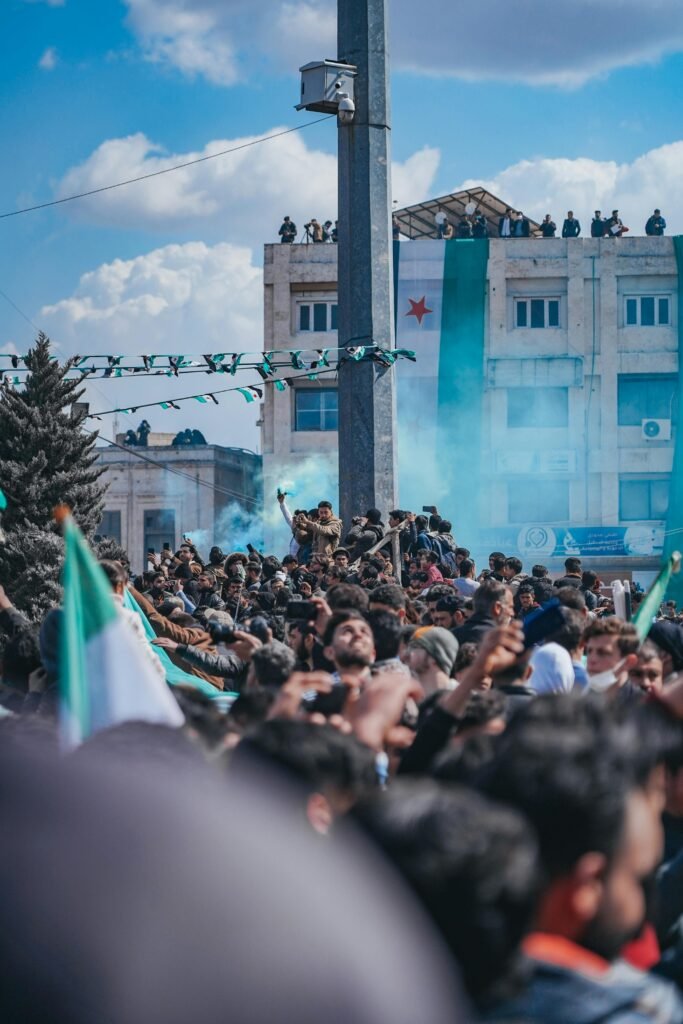

Conflict and Violence: The Cost of Statelessness
The Kurdish struggle has been marked by extensive violence, both from state repression and internal divisions.
The Anfal campaign in Iraq during the 1980s resulted in mass killings and displacement
The PKK-Turkey conflict has caused tens of thousands of deaths
Internal Kurdish conflicts, such as the KDP-PUK civil war in the 1990s, weakened the movement
Kurdish forces played a significant role in combating ISIS in Iraq and Syria
Violence has both strengthened Kurdish identity and complicated their international legitimacy, particularly where movements are labeled as insurgent or terrorist organizations.
The Kurdistan Regional Government (KRG)
The Kurdistan Regional Government (KRG) represents the most institutionalized form of Kurdish autonomy. Established formally in 2005, it operates as a federal entity within Iraq with its own parliament, security forces (Peshmerga), and economic policies.
Key Features:
A relatively stable political system compared to the rest of Iraq
Control over significant natural resources, particularly oil
Strategic relationships with international actors
Challenges:
Political rivalry between major parties (KDP and PUK)
Economic dependency and governance issues
Ongoing disputes with the central Iraqi government over territory and resource control
The 2017 independence referendum highlighted both the strength of Kurdish national aspirations and the limitations imposed by regional and international opposition.
Rojava and Democratic Confederalism
The Kurdish-led administration in northern Syria—commonly known as Rojava—offers a distinct model of autonomy.
Ideological Foundation:
Inspired by Abdullah Öcalan’s concept of democratic confederalism, Rojava emphasizes decentralized governance, direct democracy, gender equality, and multi-ethnic inclusion.
Achievements:
Establishment of functioning governance structures during conflict
Effective resistance against ISIS
Promotion of progressive social policies
Limitations:
Lack of formal international recognition
Dependence on external military and political support
Vulnerability to regional military interventions, particularly from Turkey
Rojava represents a departure from traditional state-centric nationalism, proposing an alternative vision of autonomy without sovereignty.
Diplomacy and Dialogue: Between Hope and Breakdown
Efforts at peaceful resolution have been intermittent and often short-lived.
Autonomy agreements in Iraq during the 1970s ultimately failed
The 1998 Washington Agreement helped resolve internal Kurdish conflict in Iraq
Peace talks between Turkey and the PKK (2013–2015) collapsed
Recent developments suggest renewed interest in non-violent political solutions
These efforts have been undermined by mistrust, political instability, and competing regional interests.
The Present Moment: Fragmented Gains and Persistent Uncertainty
Today, the Kurdish movement is characterized by uneven progress:
Institutionalized autonomy in Iraq
Experimental governance in Syria
Continued insurgency in Turkey
Political suppression in Iran
This fragmented reality reflects both the adaptability of Kurdish political strategies and the structural constraints imposed by regional geopolitics.
Future Trajectories: Between Autonomy and Statelessness
Several possible trajectories can be identified:
- Deepened Autonomy
Expansion of federal or decentralized governance structures within existing states appears to be the most realistic outcome. - Managed Status Quo
Continued fragmentation with periodic conflict and limited reforms. - Independent Kurdistan
While symbolically powerful, this scenario remains unlikely due to unified opposition from regional states. - Post-State Political Models
The spread of democratic confederalism may offer an alternative to traditional statehood, emphasizing autonomy without sovereignty.
The Kurdish quest for autonomy is not a linear struggle for independence but a complex and evolving negotiation shaped by history, ideology, and geopolitics. It challenges the conventional nation-state model and introduces alternative forms of political organization, particularly in contexts of conflict and fragmentation.
Rather than culminating in a singular outcome, the Kurdish movement continues to adapt, reflecting both resilience and constraint. Its future will depend on the interplay between internal political developments, regional dynamics, and international engagement.
Conclusion
The Kurdish quest for autonomy remains one of the most enduring and complex political struggles in the modern Middle East. Over more than a century, Kurdish movements have navigated shifting geopolitical landscapes, oscillating between rebellion, negotiation, and institutional engagement. Despite moments of progress—most notably the establishment of the Kurdistan Regional Government in Iraq and the emergence of autonomous governance structures in northern Syria—the broader aspiration for a unified Kurdish state continues to face significant structural and political obstacles.
A defining feature of the Kurdish movement is its internal diversity. Differences in ideology, leadership, and strategic priorities have produced multiple, and at times competing, visions of autonomy. While some factions continue to emphasize national independence, others have shifted toward decentralized governance models that challenge traditional state-centric frameworks. This ideological plurality reflects both the adaptability of Kurdish political thought and the constraints imposed by the regional and international environment.
Equally significant is the role of external actors, whose support has often been conditional and inconsistent. Engagement by global and regional powers has periodically enabled Kurdish gains but has also reinforced their vulnerability to shifting geopolitical interests. As a result, advances toward autonomy have frequently occurred during periods of crisis—such as war or state collapse—only to encounter resistance once stability is restored.
Looking ahead, the future of the Kurdish movement is likely to be shaped less by the prospect of full independence and more by negotiated forms of autonomy within existing states. Federal arrangements, decentralization, and hybrid governance models may offer more viable pathways forward. Ultimately, the Kurdish experience underscores the limitations of rigid nation-state structures and highlights the need for more flexible and inclusive political frameworks in multi-ethnic societies.
READ ALSO: OTHER BLOGS AT RIGHTSRECALL.COM
Related posts:
 Rights of People to Exist: Meaning, Theories, Discourse and International Legal Frameworks
 Human Rights in the Age of AI: Policies and Politics
Religious Freedom in India: Constitutional Rights and Democratic Prospects
Human Rights in the Age of AI: Policies and Politics
Religious Freedom in India: Constitutional Rights and Democratic Prospects
 Ceasefire: Legal and Political Dimensions in International Law and International Relations
 Minority Rights in International Law: A Comprehensive Overview
 Article 21 of Indian Constitution — Right to Life & Personal Liberty Explained