India and the United States are the twin pillars of global democracy and human rights because both nations built their entire systems of governance on constitutionally guaranteed freedoms and dignities. The United States Constitution with its twenty-seven amendments — especially the Bill of Rights (1791) — and the Indian Constitution (1950) with its six categories of Fundamental Rights together represent the most comprehensive, the most enduring, and the most inspiring enshrinement of human rights in the history of democratic governance.
India and the United States are the twin pillars of global democracy and human rights because both nations built their entire systems of governance on constitutionally guaranteed freedoms and dignities. The United States Constitution with its twenty-seven amendments — especially the Bill of Rights (1791) — and the Indian Constitution (1950) with its six categories of Fundamental Rights together represent the most comprehensive, the most enduring, and the most inspiring enshrinement of human rights in the history of democratic governance.
How India and the USA Became the Twin Pillars of Global Democracy and Human Rights
There are rare moments in history when the courage of an entire people and the genius of their greatest minds converge. These moments produce something profoundly moral and legally powerful, permanently changing the course of human civilization. The founding of constitutional democracy in the United States and the Republic of India are two such moments — separated by 174 years, connected by a shared belief in the dignity of every human being, and shaped by visionary legal and political minds.
The United States — the oldest written constitutional democracy — declared in 1776 that all human beings are created equal. They are endowed with inalienable rights to life, liberty, and the pursuit of happiness. India — the largest democracy — declared in 1950 that every citizen, regardless of religion, caste, gender, language, or birth, was entitled to Fundamental Rights protected by the supreme law of the land. These are not mere governmental documents. They are civilizational promises — solemn declarations that free peoples have made to themselves and the world about what humans deserve.
This post celebrates that extraordinary shared journey — the historical struggles, the founding visions, the constitutional achievements, and the continuing commitment of both nations to the ideal that freedom is not a privilege but an inalienable right belonging to every person. Understanding how India and the United States became the twin pillars of global democracy and human rights is an act of civic gratitude — a recognition of what generations of brave people built for those who came after.
The Historical Roots of Freedom: Two Nations, One Shared Dream of Dignity
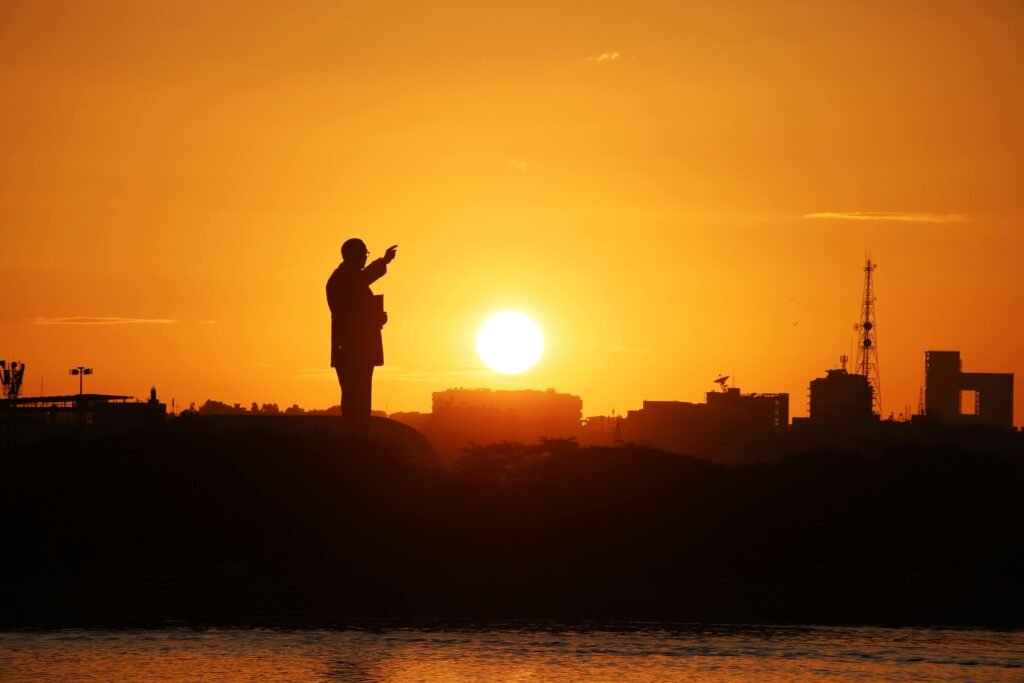


America’s Long and Courageous Road to Constitutional Liberty
The American story of constitutionally protected rights began in resistance and sacrifice. It was a determination to be treated as free human beings rather than subjects of arbitrary power. By the mid-eighteenth century, the thirteen British colonies had grown unwilling to accept governance without representation, taxation without consent, and suppression of free expression. These were not abstract grievances — they were lived injustices experienced by ordinary men and women in communities from Massachusetts to Georgia.
The Declaration of Independence, drafted primarily by Thomas Jefferson with contributions from Benjamin Franklin, John Adams, Roger Sherman, and Robert Livingston, and adopted unanimously by the Second Continental Congress on July 4, 1776, was the first great act of human rights proclamation in the modern democratic era. Its language was revolutionary not only in its political implications but in its moral depth and universal reach.
The declaration’s assertion that “all men are created equal” and that they are “endowed by their Creator with certain unalienable Rights” among which are “Life, Liberty and the pursuit of Happiness” was a statement that transcended the American colonies and spoke to all of humanity. It announced, for the first time in a founding national document, that government exists to serve human beings — not the other way around — and that any government which fails this purpose may be altered or abolished by the people.
The Constitutional Convention that met in Philadelphia from May to September 1787, attended by fifty-five of the most brilliant legal, political, and philosophical minds of the age — including James Madison, who is rightly called the Father of the Constitution, George Washington who presided over the proceedings, Alexander Hamilton, Benjamin Franklin, and Gouverneur Morris — produced the United States Constitution.
Ratified on June 21, 1788 when New Hampshire became the ninth state to ratify it, this document established the world’s first federal constitutional republic with separated powers, an independent judiciary, and a system of checks and balances designed to prevent the concentration of power in any single branch of government. It remains the oldest written national constitution still in active operation anywhere in the world — a testament to its extraordinary durability and wisdom.
Critically, the Constitution’s ratification was accompanied by the promise that a Bill of Rights would be added to explicitly protect the freedoms of individual citizens against potential federal overreach. James Madison, who had initially been sceptical of the need for a separate bill of rights, became its primary drafter after hearing the concerns of citizens and states. On December 15, 1791, the first ten amendments to the Constitution — the Bill of Rights — were ratified, giving the American people the most specific, legally binding, and comprehensive written protection of individual freedoms that any nation had yet produced.
India’s Magnificent and Transformative Constitutional Moment
India’s journey to constitutional democracy was shaped by a struggle for dignity that was both political and deeply human. The Indian independence movement, which grew from a disciplined legal challenge to colonial rule into a mass mobilisation of hundreds of millions of ordinary citizens led by Mahatma Gandhi, Jawaharlal Nehru, Sardar Vallabhbhai Patel, Subhas Chandra Bose, Maulana Abul Kalam Azad, and countless unsung heroes, was at its very heart a human rights movement. It was a civilisational demand — peaceful, persistent, and ultimately irresistible — that an ancient people of extraordinary cultural depth and moral sophistication be recognised as free human beings with the right to govern themselves.
When independence came on August 15, 1947, India faced a challenge of governance that few nations in history had ever confronted at such scale and complexity: building a unified democratic republic from a society of extraordinary religious, linguistic, ethnic, and social diversity, simultaneously healing the trauma of partition and addressing centuries of social inequality.
The answer to this challenge was the Indian Constitution — drafted by a Constituent Assembly of 299 members that deliberated with extraordinary care, depth, and scholarship for two years, eleven months, and seventeen days, considering over 7,600 amendments and drawing upon the constitutional traditions of the United States, the United Kingdom, Ireland, Canada, Australia, Germany, and others before producing something uniquely Indian in its comprehensiveness and its moral vision.
Dr. Bhimrao Ramji Ambedkar, the chairman of the Drafting Committee and the principal architect of the Constitution, was a man of towering intellectual stature — a legal scholar educated at Columbia University in New York and Gray’s Inn in London, a philosopher, an economist, and a social reformer who brought to the task of constitution-making both the breadth of a global legal education and the depth of a personal understanding of what it means to be denied one’s dignity in one’s own land.
Jawaharlal Nehru, whose Objectives Resolution of December 13, 1946 set the moral compass for the entire document, and Sardar Vallabhbhai Patel, who was instrumental in integrating 562 princely states into the Union, were among the other towering figures whose vision shaped the Constitution. Together they produced the longest and most detailed written national constitution in the world — a document of 395 original articles, 22 parts, and 8 schedules, adopted on November 26, 1949 and brought into force on January 26, 1950, celebrated annually as Republic Day.
The Greatest Constitutional Documents in the History of Human Freedom
The United States Constitution and All Its Human Rights Amendments — Verified and Complete
The United States Constitution protects human rights through its original text and through its twenty-seven amendments. The first ten — the Bill of Rights — form the core of individual rights protections. But numerous subsequent amendments have expanded and deepened those protections in ways that have transformed American society and inspired the world. Every amendment listed below is verified, accurate, and constitutionally confirmed.
The Bill of Rights (Amendments 1–10), ratified December 15, 1791:
The First Amendment is the cornerstone of American democratic freedom. It prohibits Congress from making any law respecting an establishment of religion, or prohibiting the free exercise thereof — the twin guarantees of the Establishment Clause and the Free Exercise Clause that together protect religious liberty. It also protects freedom of speech, freedom of the press, the right of the people to peaceably assemble, and the right to petition the government for a redress of grievances. Five fundamental freedoms in a single amendment — this is the constitutional provision that more than any other defines what it means to live in a free society.
The Second Amendment protects the right of the people to keep and bear arms. Ratified in the context of the importance placed on citizen militias in the early republic, this amendment has been the subject of significant Supreme Court interpretation, most notably in District of Columbia v. Heller (2008), in which the Court affirmed an individual right to possess firearms independent of militia service.
The Third Amendment prohibits the quartering of soldiers in private homes without the consent of the owner in peacetime, and restricts it even in wartime except as prescribed by law. This amendment addressed one of the most immediate and personal grievances of colonial Americans under British rule and remains a foundational protection of the privacy and sanctity of the home.
The Fourth Amendment protects the right of the people to be secure in their persons, houses, papers, and effects against unreasonable searches and seizures. It establishes that no warrants shall issue except upon probable cause, supported by oath or affirmation, and particularly describing the place to be searched and the persons or things to be seized. This amendment is the constitutional foundation of privacy rights in American law and has been interpreted by the Supreme Court over generations to address new technologies and surveillance methods.
The Fifth Amendment provides five distinct and vital protections. It requires a grand jury indictment for serious criminal charges. It prohibits double jeopardy — being tried twice for the same offence. It protects against compelled self-incrimination — the famous right to “plead the Fifth.” It guarantees that no person shall be deprived of life, liberty, or property without due process of law. And it requires just compensation when private property is taken for public use — the Takings Clause. These five protections together ensure that the power of the state to prosecute and punish its citizens is always constrained by law and fairness.
The Sixth Amendment guarantees the rights of accused persons in criminal prosecutions. These include the right to a speedy and public trial by an impartial jury of the state and district where the crime was committed, the right to be informed of the nature and cause of the accusation, the right to confront witnesses against them, the right to have compulsory process for obtaining witnesses in their favour, and the right to have the assistance of counsel for their defence. The Supreme Court’s decision in Gideon v. Wainwright (1963) extended the right to counsel to all criminal defendants, including those who cannot afford a lawyer — a transformative expansion of this amendment’s protection.
The Seventh Amendment preserves the right to a jury trial in civil cases at common law where the value in controversy exceeds twenty dollars, and provides that no fact tried by a jury shall be re-examined by any court of the United States except according to the rules of common law. This amendment ensures that ordinary citizens retain a meaningful role in the resolution of civil disputes through the democratic institution of the jury.
The Eighth Amendment prohibits the requirement of excessive bail, the imposition of excessive fines, and the infliction of cruel and unusual punishments. This is a foundational statement of civilisational commitment — a constitutional declaration that the state will not visit barbarity or disproportionate punishment upon those subject to its authority. The Supreme Court has interpreted this amendment to prohibit the execution of persons who were minors at the time of their offence (Roper v. Simmons, 2005) and persons with intellectual disabilities (Atkins v. Virginia, 2002).
The Ninth Amendment declares that the enumeration in the Constitution of certain rights shall not be construed to deny or disparage others retained by the people. This is one of the most philosophically profound provisions in the entire Bill of Rights — a recognition by the framers that rights do not exist only because they are written down, and that the Constitution’s listing of specific rights does not exhaust the full range of human freedoms that citizens possess.
The Tenth Amendment reserves to the states respectively, or to the people, all powers not delegated to the United States by the Constitution, nor prohibited by it to the states. This amendment is the constitutional foundation of federalism — the system by which power is distributed between the national government and the states — and ensures that local communities retain meaningful authority over their own governance.
Subsequent Amendments Protecting Human Rights (Amendments 13–15, 19, 23–24, 26):
The Thirteenth Amendment (ratified December 6, 1865) abolished slavery and involuntary servitude throughout the United States, except as punishment for crime. This is the most fundamental expansion of human rights in American constitutional history, achieved after the bloodiest war the nation has ever fought, in which approximately 620,000 soldiers died and countless civilians suffered. It transformed the constitutional promise of human equality from a philosophical aspiration into a legal reality — at least as a matter of formal law.
The Fourteenth Amendment (ratified July 9, 1868) is arguably the most important constitutional amendment after the original Bill of Rights in terms of its transformative impact on American human rights law. It contains four critical provisions. The Citizenship Clause grants citizenship to all persons born or naturalised in the United States. The Privileges or Immunities Clause protects citizens’ constitutional privileges from state infringement.
The Due Process Clause prohibits states from depriving any person of life, liberty, or property without due process of law — a provision that the Supreme Court has used over generations to apply the protections of the Bill of Rights to state governments. The Equal Protection Clause prohibits states from denying to any person within their jurisdiction the equal protection of the laws — the constitutional foundation of Brown v. Board of Education (1954), which struck down racial segregation in public schools, and of Obergefell v. Hodges (2015), which recognised the constitutional right to marriage equality.
The Fifteenth Amendment (ratified February 3, 1870) prohibits the denial or abridgement of the right to vote on account of race, colour, or previous condition of servitude. Together with the Thirteenth and Fourteenth Amendments, it forms what are known as the Reconstruction Amendments — the constitutional response to the Civil War and the beginning of the constitutional project of racial equality that has continued to develop through legislation and judicial interpretation across the following century and a half.
The Nineteenth Amendment (ratified August 18, 1920) prohibits the denial or abridgement of the right to vote on account of sex. After more than seventy years of sustained advocacy by the women’s suffrage movement — including the extraordinary courage of figures such as Susan B. Anthony, Elizabeth Cady Stanton, Sojourner Truth, and Alice Paul — American women won the constitutional right to participate as full political citizens in their democracy. This amendment extended the democratic promise of the Constitution to the entirety of the adult population for the first time.
The Twenty-Third Amendment (ratified March 29, 1961) granted residents of the District of Columbia the right to vote in presidential elections by allocating them Electoral College votes. This amendment addressed a significant democratic gap — the fact that citizens residing in the nation’s capital had no voice in the election of its president — and extended the constitutional right of political participation to hundreds of thousands of citizens.
The Twenty-Fourth Amendment (ratified January 23, 1964) abolished poll taxes in federal elections. Poll taxes had been used in several states, particularly in the South, as a mechanism to disenfranchise poor citizens — disproportionately African American citizens — by making the exercise of the right to vote contingent on the payment of a tax. This amendment affirmed that the right to vote in a democracy cannot be conditioned on wealth and stands as an important protection of universal suffrage.
The Twenty-Sixth Amendment (ratified July 1, 1971) lowered the voting age from twenty-one to eighteen years throughout the United States. Passed during the Vietnam War era, when the profound injustice of requiring young men to serve and die in military service while denying them the right to vote had become undeniable, this amendment extended full democratic participation rights to millions of young Americans and reflected the constitutional system’s continuing capacity to grow more inclusive across generations.
Additional Constitutional Provisions Protecting Human Rights:
Beyond the amendments, the original Constitution itself contains important human rights protections that are often overlooked. Article I, Section 9 prohibits Congress from suspending the writ of habeas corpus except in cases of rebellion or invasion when the public safety requires it — the foundational protection against arbitrary imprisonment that dates back to the Magna Carta of 1215. It also prohibits bills of attainder (legislative acts that punish specific individuals without trial) and ex post facto laws (laws that criminalise conduct that was legal when it occurred).
Article III guarantees the right to a jury trial in criminal cases. Article VI prohibits any religious test as a qualification for any public office or public trust under the United States — a founding protection of religious freedom in the structure of government itself.
The Indian Constitution: The World’s Most Comprehensive Charter of Fundamental Rights
Part III of the Indian Constitution, spanning Articles 12 to 35, guarantees six categories of Fundamental Rights that together constitute the most thorough, the most detailed, and in many respects the most progressive enshrinement of human rights in any constitutional document in the world.
The Right to Equality (Articles 14–18) establishes five transformative protections. Article 14 guarantees equality before the law and equal protection of the laws to every person in India — a guarantee that applies to citizens and non-citizens alike, reflecting the universality of human dignity. Article 15 prohibits discrimination by the state on grounds of religion, race, caste, sex, or place of birth, and also prohibits such discrimination in access to public places, shops, hotels, and places of public entertainment. Article 15(3) and 15(4) permit the state to make special provisions for women, children, and socially and educationally backward classes — a constitutional recognition that formal equality sometimes requires substantive affirmative measures.
Article 16 guarantees equality of opportunity in matters of public employment and prohibits employment discrimination on the grounds listed in Article 15. Article 17 abolishes untouchability in all its forms and makes its practice in any form a punishable offence — one of the most extraordinary acts of social justice in any founding constitutional document in the world, directly addressing a centuries-old practice of caste-based discrimination in the text of the supreme law itself. Article 18 abolishes titles except military and academic distinctions, preventing the creation of a hereditary aristocracy.
The Right to Freedom (Articles 19–22) provides six specific freedoms under Article 19 that are the heart of democratic liberty: freedom of speech and expression, freedom to assemble peaceably without arms, freedom to form associations and unions, freedom to move freely throughout the territory of India, freedom to reside and settle in any part of India, and freedom to practise any profession or to carry on any occupation, trade, or business.
Article 20 provides three protections for persons accused of offences: protection against conviction for an act that was not an offence at the time it was committed (ex post facto protection), protection against being tried or punished more than once for the same offence (double jeopardy protection), and protection against being compelled to be a witness against oneself (self-incrimination protection).
Article 21 — perhaps the most celebrated and most expansively interpreted provision in the entire Constitution — states that no person shall be deprived of his life or personal liberty except according to procedure established by law. The Supreme Court of India has interpreted this single article to encompass the right to dignity, the right to livelihood, the right to health, the right to a clean environment, the right to education, the right to privacy (affirmed unanimously by a nine-judge bench in K.S. Puttaswamy v. Union of India, 2017), and many other aspects of a fully human life.
Article 21A, inserted by the 86th Constitutional Amendment in 2002, guarantees the right to free and compulsory education to all children between the ages of six and fourteen — a right that was later given legislative form through the Right to Education Act, 2009. Article 22 provides protections for persons arrested and detained, including the right to be informed of the grounds of arrest, the right to consult and be defended by a legal practitioner, and the right to be produced before a magistrate within twenty-four hours of arrest.
The Right Against Exploitation (Articles 23–24) prohibits traffic in human beings and all forms of forced labour under Article 23, making these offences punishable by law — a constitutional recognition that human beings can never be treated as commodities. Article 24 prohibits the employment of children below the age of fourteen in any factory, mine, or other hazardous employment — a protection for the most vulnerable members of society that was breathtakingly progressive for a newly independent developing nation in 1950.
The Right to Freedom of Religion (Articles 25–28) reflects India’s extraordinary and ancient tradition of religious pluralism. Article 25 guarantees every person freedom of conscience and the right to freely profess, practise, and propagate religion. Article 26 grants religious denominations the right to establish and maintain religious institutions, manage their own affairs in matters of religion, and own and acquire property. Article 27 ensures that no person shall be compelled to pay taxes for the promotion of any particular religion. Article 28 prohibits religious instruction in state-funded educational institutions.
Cultural and Educational Rights (Articles 29–30) protect the rich diversity of India’s civilisation. Article 29 protects the right of any section of citizens to conserve their distinct language, script, or culture, and prevents discrimination in admission to educational institutions on grounds of religion, race, caste, or language. Article 30 grants all religious and linguistic minorities the right to establish and administer their own educational institutions, and prohibits the state from discriminating against such institutions in granting financial aid.
The Right to Constitutional Remedies (Article 32), described by Dr. Ambedkar as “the very soul of the Constitution and the heart of it,” guarantees every citizen the right to move the Supreme Court directly for the enforcement of the Fundamental Rights guaranteed by Part III.
The Supreme Court is empowered to issue writs of habeas corpus (for the release of persons unlawfully detained), mandamus (commanding public officials to perform their legal duties), prohibition (preventing lower courts from exceeding their jurisdiction), certiorari (quashing the orders of lower courts or tribunals), and quo warranto (inquiring into the legality of a person’s claim to a public office).
Article 226 extends similar writ jurisdiction to the High Courts of every state. These provisions ensure that the Fundamental Rights are not merely aspirational declarations but enforceable legal entitlements — rights with teeth.
The Intellectual and Constitutional Connection Between the Two Documents
The connection between the Indian Constitution and the American constitutional tradition is direct, substantive, and deeply felt. Dr. Ambedkar studied at Columbia University from 1913 to 1916, where he was profoundly influenced by the political philosophy of John Dewey and the American constitutional tradition. He returned to this intellectual inheritance throughout his life and drew upon it explicitly in drafting the Indian Constitution.
The specific correspondences are numerous and verified. The guarantee of equality before the law and equal protection of the laws in Article 14 of the Indian Constitution corresponds directly to the Equal Protection Clause of the Fourteenth Amendment. The protection against double jeopardy in Article 20(2) mirrors the Fifth Amendment’s protection. The protection against self-incrimination in Article 20(3) corresponds to the Fifth Amendment’s privilege against self-incrimination.
The protection against ex post facto laws in Article 20(1) corresponds to the ex post facto protections in Article I, Section 9 of the American Constitution. The right to life and personal liberty in Article 21 echoes the due process protections of the Fifth and Fourteenth Amendments. The concept of a supreme constitution interpreted by an independent judiciary, itself drawn from American constitutional tradition, provides the structural framework within which all of India’s Fundamental Rights operate.
But India’s constitutional vision went beyond its American inspiration in important and distinctive ways. The Indian Constitution explicitly abolished untouchability — a step that the American Constitution did not take with respect to racial discrimination until the post-Civil War amendments. It included explicit protections for linguistic and religious minorities that the American Bill of Rights does not contain in comparable detail.
It incorporated Directive Principles of State Policy in Part IV — non-justiciable but constitutionally recognised social and economic goals including the right to adequate means of livelihood, equal pay for equal work, and just and humane conditions of work — that reflect a vision of social democracy that complements and enriches the civil and political rights of Part III.
The two constitutions are not competitors but companions — each representing the best moral and legal aspirations of its own people and historical moment, and together representing the highest achievements of constitutional democracy as a form of human self-governance.
How Rights Were Developed, Preserved, and Protected Across Generations
The Living and Growing American Constitutional Tradition
The American constitutional tradition has grown and deepened across more than two centuries through constitutional amendments, transformative Supreme Court decisions, and landmark legislation that has progressively expanded the circle of those protected by the Constitution’s guarantees.
The Civil Rights Act of 1964 — one of the most significant pieces of legislation in American history — prohibited discrimination on grounds of race, colour, religion, sex, or national origin in employment and in places of public accommodation, giving legislative substance to the Fourteenth Amendment’s equal protection guarantee.
The Voting Rights Act of 1965 enforced the Fifteenth Amendment’s guarantee of the right to vote by prohibiting discriminatory voting practices across the country. The Fair Housing Act of 1968 prohibited discrimination in the sale, rental, and financing of housing. The Americans with Disabilities Act of 1990 extended the constitutional values of equality and dignity to persons with disabilities in employment, public services, and public accommodations.
The Supreme Court of the United States has been the great interpreter and guardian of constitutional rights across generations. In Brown v. Board of Education (1954), the Court unanimously held that racial segregation in public schools violated the Equal Protection Clause of the Fourteenth Amendment — a decision that was the legal cornerstone of the Civil Rights Movement. In Miranda v. Arizona (1966), the Court required that persons in police custody be informed of their Fifth and Sixth Amendment rights before interrogation, producing the famous Miranda warning that has entered both legal practice and popular culture.
In Loving v. Virginia (1967), the Court struck down Virginia’s anti-miscegenation law prohibiting interracial marriage, holding it unconstitutional under both the Due Process and Equal Protection Clauses — a landmark affirmation of personal liberty and racial equality.
In Roe v. Wade (1973), the Court recognised a constitutional right to privacy under the Fourteenth Amendment’s Due Process Clause that included a woman’s right to choose an abortion — a decision that has been the subject of ongoing constitutional debate and was revisited in Dobbs v. Jackson Women’s Health Organization (2022).
In Lawrence v. Texas (2003), the Court struck down laws criminalising same-sex intimate conduct, affirming the liberty and dignity of gay and lesbian Americans under the Fourteenth Amendment. In Obergefell v. Hodges (2015), the Court held that the Fourteenth Amendment requires states to license and recognise marriages between same-sex couples — a profound affirmation of equal dignity under the Constitution.
India’s Expanding and Creative Jurisprudence of Rights
India’s constitutional rights tradition has been shaped by an equally remarkable and in many respects even more innovative judicial journey. The Supreme Court of India has, across seven decades of jurisprudence, expanded the meaning and scope of the Fundamental Rights in ways that have made the Constitution a genuinely living instrument of social transformation.
The development of Public Interest Litigation by Justices P.N. Bhagwati and V.R. Krishna Iyer in the late 1970s and early 1980s was a revolutionary contribution to constitutional law — not only in India but in the global jurisprudence of human rights. PIL relaxed the traditional rules of locus standi to allow any public-spirited person or organisation to approach the Supreme Court on behalf of those whose rights were being violated but who lacked the resources, access, or knowledge to seek legal redress themselves.
In Hussainara Khatoon v. State of Bihar (1979), the Court addressed the plight of undertrial prisoners who had been imprisoned for periods longer than the maximum sentence for their alleged offences — a landmark PIL that directly produced the release of over 40,000 people and established the right to a speedy trial as a fundamental right under Article 21. PIL has since been used to protect environmental rights, the rights of bonded labourers, the rights of children in juvenile homes, the rights of pavement dwellers, and the rights of disaster victims — making the Constitution genuinely accessible to every citizen of the republic regardless of their economic or social position.
The Supreme Court’s expansive interpretation of Article 21 has produced a body of jurisprudence that is among the most progressive and creative in the world. In Maneka Gandhi v. Union of India (1978), the Court overruled earlier precedent and held that the procedure prescribed by law for depriving a person of life or liberty must be fair, just, and reasonable — importing the American doctrine of substantive due process into the Indian constitutional tradition.
In Francis Coralie Mullin v. Administrator, Union Territory of Delhi (1981), the Court held that the right to life includes the right to live with dignity and all that goes along with it, including the bare necessities of life such as adequate nutrition, clothing, and shelter.
In Vishaka v. State of Rajasthan (1997), the Court laid down binding guidelines on the prevention of sexual harassment at the workplace in the absence of specific legislation, directly invoking international human rights conventions including CEDAW as interpretive tools. In K.S. Puttaswamy v. Union of India (2017), a unanimous nine-judge bench of the Supreme Court declared that the right to privacy is a fundamental right protected under Article 21 — a landmark decision in the digital age.
The Right to Information Act of 2005, the Right to Education Act of 2009, the Protection of Women from Domestic Violence Act of 2005, the Scheduled Castes and the Scheduled Tribes (Prevention of Atrocities) Act of 1989 as amended in 2015, and the Legal Services Authorities Act of 1987 that established a nationwide system of free legal aid for those who cannot afford it — all represent the translation of constitutional values into practical, enforceable protections for citizens across every level of Indian society.
Rights in Practice: Celebrating Remarkable Progress and Inspiring Continued Aspiration
Both India and the United States have made extraordinary and historically unprecedented progress in expanding the practical reach of constitutional rights to every corner of their societies. In the United States, universal adult suffrage — achieved progressively through the Fifteenth, Nineteenth, Twenty-Third, Twenty-Fourth, and Twenty-Sixth Amendments — transformed a republic initially restricted to a narrow propertied white male electorate into a democracy where every adult citizen has an equal voice.
Anti-discrimination legislation, landmark judicial decisions, and the growth of a vibrant civil society have steadily expanded the practical meaning of equality and freedom for every community.
In India, universal adult suffrage was adopted from the very first general election in 1951–52 — a decision of breathtaking democratic faith and ambition in a country where the majority of citizens were at that time illiterate and had never before voted. That India has conducted seventeen consecutive general elections, each one of the largest democratic exercises in human history — with the 2024 general election seeing approximately 642 million people cast their votes across 543 parliamentary constituencies over 44 days — is one of the greatest institutional achievements of the twentieth and twenty-first centuries.
The ongoing aspirations of both nations in the realm of rights implementation are not signs of constitutional weakness or failure. They are signs of constitutional vitality — the natural continuation of a living democratic commitment to ensuring that the protections written into founding documents reach every citizen who lives under them.
Both nations can inspire each other through mutual learning. Both can invest further in legal literacy, ensuring that every citizen knows their rights as well as they know their duties. Both can strengthen the institutions that enforce those rights — independent courts, accessible legal aid systems, robust human rights commissions, and a free and responsible press. Both can build on their extraordinary shared tradition of constitutional democracy to inspire the next generation of free nations that the world so desperately needs.
Why India and America Are and Will Always Remain the World’s Greatest Democratic Models
① They proved that diversity and democracy can coexist and flourish. India — home to over 1.4 billion people, more than 1,600 languages, six major world religions, and thousands of distinct ethnic and cultural communities — and the United States — built by immigrants from every nation on earth — have both demonstrated that constitutional rights are the most powerful force ever discovered for holding profoundly diverse societies together in freedom, dignity, and mutual respect.
② They built constitutional institutions that outlast individuals and political cycles. Neither country’s democracy depends on the virtue or wisdom of any single leader. The Constitution, the independent judiciary, the free press, a robust civil society, and the active engagement of an informed citizenry — all protected and enabled by constitutional rights — ensure that the democratic system endures and self-corrects across generations regardless of who holds office.
③ They created the foundational intellectual tradition for global human rights law. The Universal Declaration of Human Rights, adopted by the United Nations General Assembly on December 10, 1948, was profoundly shaped by the constitutional traditions of both India and the United States.
Eleanor Roosevelt of the United States chaired the UN Commission on Human Rights that drafted the Declaration and brought American constitutional thinking directly to the drafting process. Hansa Mehta of India — a member of the Commission — was instrumental in changing the Declaration’s language from “all men are born free and equal” to “all human beings are born free and equal” — a change of three words that made the document genuinely universal.
④ They demonstrate the irreplaceable self-correcting power of constitutional democracy. Both nations have confronted their deepest contradictions — the institution of slavery and the denial of rights to African Americans in the United States, the practice of untouchability and the denial of equal citizenship to the marginalised in India — and have used their constitutional frameworks, their independent judiciaries, their democratic political processes, and the courageous advocacy of their citizens to address those contradictions over time.
This capacity for self-correction through constitutional means, without abandoning democratic governance itself, is the most powerful proof of constitutional democracy’s superiority as a system of human self-governance.
⑤ Their constitutional documents belong to all of humanity. The Declaration of Independence, the Bill of Rights, the Gettysburg Address, and the speeches of Abraham Lincoln belong not only to Americans but to every human being who has ever yearned to be free. The Indian Constitution, the speeches of Dr. Ambedkar, and the philosophy of Mahatma Gandhi belong not only to Indians but to everyone who believes in dignity, justice, and the equal worth of every human life. These are gifts that two great nations gave to the whole world.
FAQ: India, USA, and Constitutional Human Rights
Q: What are all the constitutional amendments in the USA that protect human rights? A: The following amendments of the United States Constitution directly protect human rights: the First Amendment (religious freedom, free speech, free press, assembly, petition); the Second Amendment (right to bear arms); the Third Amendment (protection against quartering of soldiers); the Fourth Amendment (protection against unreasonable search and seizure).
The Fifth Amendment (grand jury, no double jeopardy, no self-incrimination, due process, just compensation); the Sixth Amendment (speedy trial, jury trial, right to counsel); the Seventh Amendment (jury trial in civil cases); the Eighth Amendment (no excessive bail or cruel punishment).
The Ninth Amendment (unenumerated rights retained by the people); the Tenth Amendment (reserved powers to states and people); the Thirteenth Amendment (abolition of slavery, 1865); the Fourteenth Amendment (citizenship, due process, equal protection, 1868); the Fifteenth Amendment (voting rights regardless of race, 1870); the Nineteenth Amendment (voting rights for women, 1920); the Twenty-Third Amendment (voting rights for DC residents, 1961); the Twenty-Fourth Amendment (abolition of poll taxes, 1964); and the Twenty-Sixth Amendment (voting age lowered to eighteen, 1971).
These seventeen amendments collectively constitute the most comprehensive constitutional protection of human rights in the world’s oldest democracy.
Q: How many Fundamental Rights are guaranteed by the Indian Constitution and what are they? A: The Indian Constitution originally guaranteed seven Fundamental Rights in Part III. The Right to Property (Article 31) was removed from the list of Fundamental Rights by the 44th Constitutional Amendment in 1978 and made a legal right under Article 300A.
The current six Fundamental Rights are: the Right to Equality (Articles 14–18), the Right to Freedom (Articles 19–22), the Right Against Exploitation (Articles 23–24), the Right to Freedom of Religion (Articles 25–28), Cultural and Educational Rights (Articles 29–30), and the Right to Constitutional Remedies (Article 32). Article 21A, added by the 86th Amendment in 2002, added the Right to Education as a Fundamental Right.
Q: How did the American Bill of Rights directly influence the Indian Constitution? A: Dr. B.R. Ambedkar, who studied at Columbia University and was deeply versed in American constitutional law, drew directly from the American constitutional tradition. The Right to Equality in Article 14 mirrors the Fourteenth Amendment’s Equal Protection Clause. Article 20’s protection against double jeopardy and self-incrimination directly corresponds to the Fifth Amendment’s equivalent protections. Article 20’s prohibition of ex post facto laws corresponds to the ex post facto protection in Article I, Section 9 of the American Constitution.
Article 21’s right to life and personal liberty echoes the Fifth and Fourteenth Amendments’ due process protections. The entire framework of a written supreme constitution interpreted by an independent judiciary with power of judicial review is itself drawn from the American constitutional model as established in Marbury v. Madison (1803).
Q: What is Article 32 of the Indian Constitution and why is it called the heart of the Constitution? A: Article 32 guarantees every citizen the right to move the Supreme Court directly for the enforcement of any of the Fundamental Rights guaranteed in Part III of the Constitution. The Supreme Court is empowered under this article to issue the writs of habeas corpus, mandamus, prohibition, certiorari, and quo warranto.
Dr. Ambedkar described it as “the very soul of the Constitution and the heart of it” because it transforms all other Fundamental Rights from aspirational declarations into enforceable legal entitlements. Without Article 32, all the other rights would be promises without a mechanism of enforcement. With it, every citizen of India — regardless of wealth, social position, or political influence — has a direct constitutional right to approach the highest court in the land for the protection of their fundamental freedoms.
Q: Why is India’s Constitution the longest in the world? A: The Indian Constitution is the longest written national constitution in the world because its framers, led by Dr. Ambedkar, deliberately chose comprehensiveness over brevity. India’s extraordinary diversity of religion, language, ethnicity, and social conditions required a detailed document that could address the specific circumstances of one of the most complex societies on earth.
The framers also incorporated provisions that in other countries are left to ordinary legislation — including detailed administrative provisions for states and territories, provisions for scheduled castes and tribes, and emergency provisions — into the constitutional text itself, ensuring their higher legal status and protection from simple legislative amendment.
Q: What is the significance of the Thirteenth, Fourteenth, and Fifteenth Amendments together? A: The Thirteenth, Fourteenth, and Fifteenth Amendments to the United States Constitution — ratified between 1865 and 1870 — are known collectively as the Reconstruction Amendments because they were enacted in the period following the Civil War to constitutionally guarantee the rights of formerly enslaved people and establish the legal equality of all citizens regardless of race.
The Thirteenth abolished slavery. The Fourteenth guaranteed citizenship and equal protection of the laws to all persons born or naturalised in the United States. The Fifteenth prohibited the denial of the right to vote based on race.
Together they represent the second founding of the American constitutional order — a recommitment to the founding promise of equality that the original Constitution had compromised by tolerating slavery. These three amendments are the constitutional foundation of the Civil Rights Movement and all subsequent civil rights legislation.
Q: How do both India and the United States continue to strengthen human rights for their citizens today? A: Both nations strengthen human rights through multiple reinforcing mechanisms. Constitutional amendments continue to expand the formal scope of rights. Independent judiciaries interpret and enforce constitutional guarantees through landmark decisions that adapt founding principles to contemporary circumstances. Progressive legislation translates constitutional values into practical protections.
Active civil society organisations — bar associations, human rights groups, women’s organisations, disability advocates, environmental groups, and legal aid societies — hold governments accountable to their constitutional promises. A free press investigates violations and informs citizens of their rights.
Legal literacy programmes educate citizens about their constitutional entitlements. Both nations also engage constructively with international human rights mechanisms — the United States through its engagement with UN human rights processes, and India through its active participation in international human rights bodies and its record as a troop contributor to UN peacekeeping missions that protect human rights in conflict zones worldwide.
A Shared Legacy, A Shared Responsibility, A Shared Future
There is a line of moral and intellectual kinship that runs from Independence Hall in Philadelphia in 1776 to the Constitution Hall in New Delhi in 1950 — a line not drawn on any map but inscribed in the conscience of every person who has ever believed that human beings are born free and deserve to live free.
The United States and India did not arrive at their constitutional greatness easily, cheaply, or without suffering. They arrived there through the courage of founders who dared to imagine a world governed by rights rather than by arbitrary power, through the sacrifice of ordinary people who demanded the dignity they were owed, through the brilliance of legal architects who understood that freedom must be written into law to be real, and through the perseverance of generations of citizens who have continued to build upon, protect, and expand the constitutional inheritance they received.
The journey towards freedom in both nations continues. It requires vigilance, education, and the active participation of citizens to ensure that the rights granted are preserved and expanded for future generations.
The American Bill of Rights with its seventeen human-rights-protecting amendments and the Indian Constitution with its six categories of Fundamental Rights — both built on the bedrock of the inherent dignity of every human being — together represent the most extraordinary achievement in the history of human self-governance. They are not perfect documents, because no human creation is perfect. But they are the greatest documents — the most ambitious, the most carefully crafted, and the most enduring — that free peoples have ever produced to protect themselves from tyranny and to guarantee their freedom to all who follow them.
The twin pillars of global democracy stand. They have stood for more than two centuries and three-quarters of a century respectively. They have survived wars, economic crises, social upheavals, and political storms that would have shattered lesser constitutional orders. And they stand today, as they will stand tomorrow, because the peoples of both nations have chosen — again and again across the generations — to honour the promise that their founders made: that every human being, in the eyes of the law and in the order of the state, is free, is equal, and possesses a dignity that no power on earth can take away.
That promise is the greatest gift both nations have given to the world. And it is the most important thing every citizen of both nations must cherish, protect, and pass on — stronger than they received it — to every generation that comes after.
Celebrate today the extraordinary constitutional gift that India and America gave to the world — and to you. Share this post with someone who loves democracy, freedom, and the dignity of every human being.
Related posts:
 Rights of People to Exist: Meaning, Theories, Discourse and International Legal Frameworks
 The Right to Freedom of Religion: Global Significance, Laws, and Future Challenges
 International Peace and Security Under the UN Charter: Promises, Progress, and the Path Forward
 Iran Israel Conflict: Complete Timeline, Wars, Agreements & Path to Peace
 Climate Change, El Niño, and Heatwaves: A Human Rights Crisis Explained – 2026
 Human Rights in the Age of AI: Policies and Politics