From Trucial Sheikhdoms to Global Power Centres:
The Gulf Monarchies Under British & American Shields
How Saudi Arabia, the UAE, Qatar, Kuwait, and Bahrain transformed from pearl-diving villages into some of the most strategically consequential states on Earth — and the empires that made it possible.
The Most Improbable Rise in Modern History
Imagine a coastline of date-palm villages and pearl-diving boats. Merchants haggling in dhow ports. Tribal leaders mediating disputes under the stars of the Arabian Peninsula. No skyscrapers, no sovereign wealth funds, no seats at the United Nations. This was the Persian Gulf barely a century ago — and it is almost impossible to reconcile that image with what the Gulf has become today.
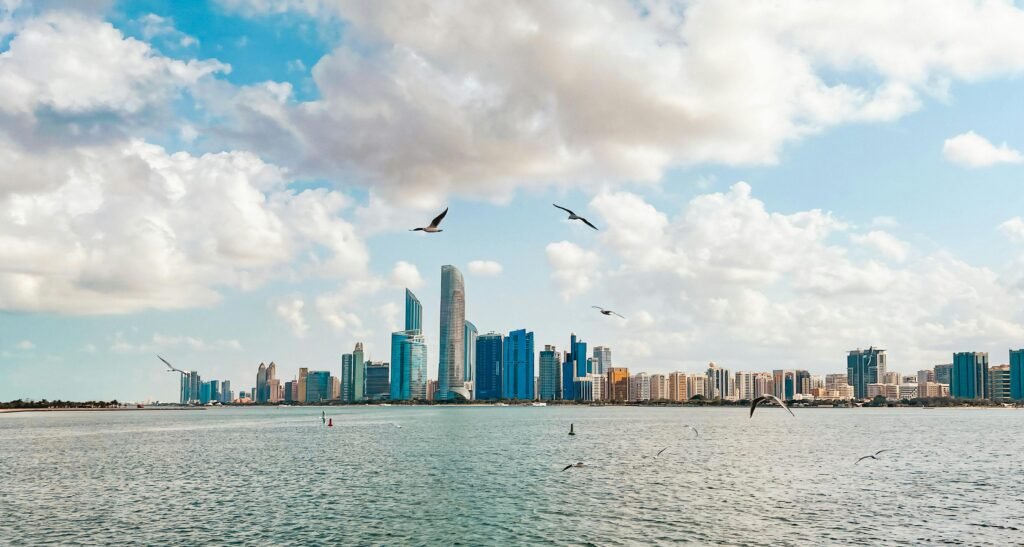
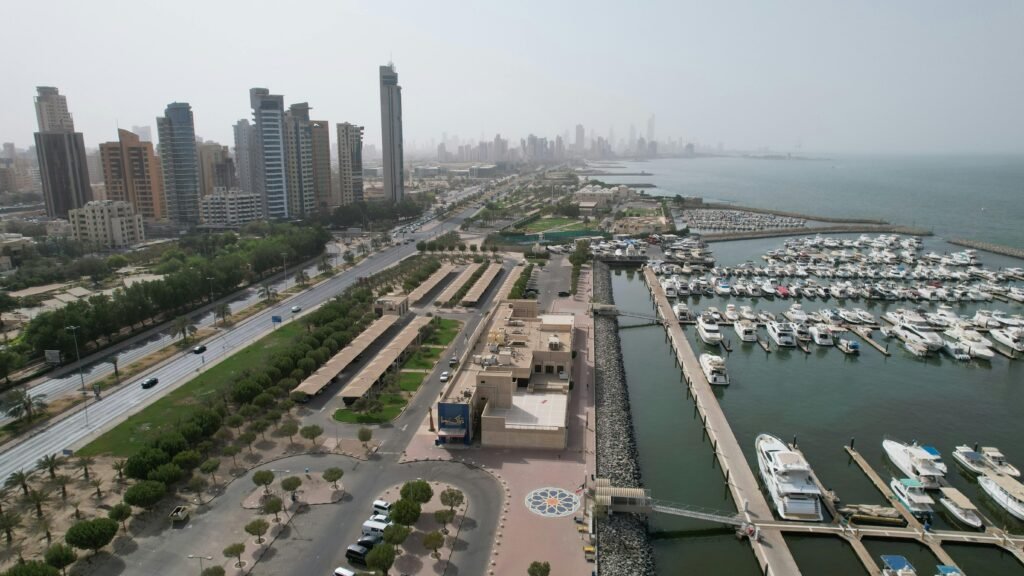
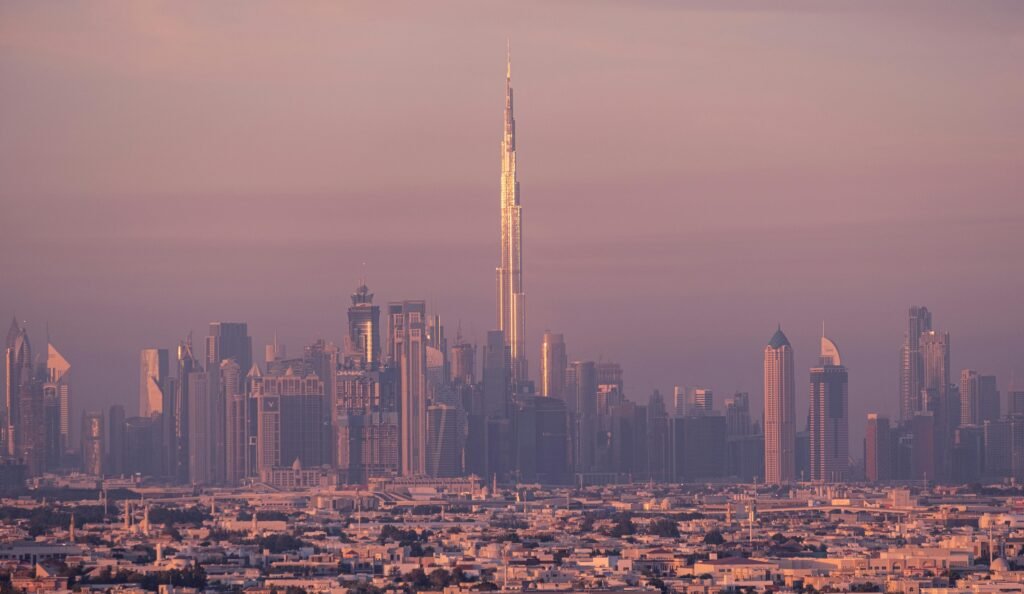
The Gulf is no longer merely a zone of protection — it is a centre of power in its own right, shaping global energy, finance, and geopolitics from Riyadh to Doha.
The modern history of the Gulf monarchies is a story of transformation shaped as much by external powers as by internal dynamics. Saudi Arabia, Qatar, Kuwait, Bahrain, and the United Arab Emirates did not emerge as strong, centralised nations in their early years. Instead, they were loosely organised sheikhdoms and tribal polities, economically dependent on maritime trade, pearling, and limited regional commerce. Political authority was rooted in kinship, tribal alliances, and local legitimacy — not modern state institutions.
Yet within little more than a century, these modest entities have evolved into some of the wealthiest and most strategically significant states in the global system. Their sovereign wealth funds dwarf those of most European nations. Their airlines connect every continent. Their diplomatic initiatives reshape conflicts from Afghanistan to the Horn of Africa. And their oil — always their oil — remains the single most consequential commodity in the global economy.
Understanding this transformation is impossible without examining the role of two successive imperial and post-imperial powers: the British Empire and the United States of America. Each, in its own way and in its own era, provided the external security umbrella under which the Gulf monarchies grew, adapted, and ultimately flourished. This article traces that complete arc — from pre-imperial tribal mosaic to the present day — and explores what it means for a world entering an era of profound geopolitical uncertainty.
✦ ✦ ✦
I Pre-Imperial Gulf
Before the Empires: A Mosaic of Tribes and Trade Winds
Before British involvement transformed the political geography of the Persian Gulf, the region was a rich and complex mosaic of tribal confederations, coastal settlements, and small emirates. Authority was decentralised, rooted in kinship networks and tribal allegiance. No single power dominated the entire Gulf coast, and political legitimacy was earned through leadership, generosity, and the ability to protect one’s community from rivals.
~1,000
Years of pearling economy before oil
1820
First major British maritime treaty
5
Gulf monarchies covered in this analysis
1971
Year of British withdrawal & UAE independence
The economy of the pre-British Gulf revolved around three pillars: pearl diving — which made the Gulf one of the world’s most important sources of natural pearls until the early 20th century — maritime trade, particularly with the Indian subcontinent and East Africa, and limited oasis-based agriculture. Towns like Dubai, Abu Dhabi, and Doha were modest coastal settlements rather than the global cities we know today.
The Rise of the Al Saud and Wahhabi Islam
In the interior of the Arabian Peninsula, a different kind of political transformation was underway. The Al Saud family, allied with the Islamic reformer Muhammad ibn Abd al-Wahhab, forged a formidable political-religious compact in the 18th century that would prove foundational to the later Saudi state. This alliance introduced a new ideological and military force into the regional equation — one driven not by coastal commerce but by territorial consolidation and religious authority. The three distinct Saudi states that emerged across the 18th and 19th centuries traced a trajectory of conquest, collapse, and revival that ultimately produced the Kingdom of Saudi Arabia in 1932.
📜 Historical Context
The Gulf’s pre-imperial political structures were not primitive or anarchic — they were sophisticated systems of consensual governance adapted to an environment of scarce resources and mobile populations. British intervention did not create order from chaos; it imposed a specific kind of external order on existing, functional societies for imperial strategic purposes.
✦ ✦ ✦
II British Entry
The Empire Arrives: Trade, Maritime Security, and Indirect Rule
Why Britain Came to the Gulf
The British Empire entered the Persian Gulf not to colonise it in the conventional territorial sense, but to secure its maritime routes to India — the so-called “Crown Jewel” of the empire. The Gulf was a critical strategic corridor linking Europe to South Asia, and its security directly affected the viability of British commercial and imperial networks that stretched from London to Calcutta.
British concerns were threefold: protection of shipping lanes from piracy and rival naval powers; prevention of strategic rivals — the Ottomans, French, and later Germans — from establishing footholds along the Gulf coast; and the broader maintenance of what the British called “the Pax Britannica,” the network of commercial and military dominance that underpinned their global empire.
The Trucial System: Protectorates by Treaty
The British approach to the Gulf was characterised by what historians call “indirect rule” — a system in which local rulers retained internal authority while surrendering control over foreign relations and defence to the Crown. This was implemented through a series of carefully negotiated treaties.
- 1820General Maritime Treaty — Signed with the rulers of the Trucial Coast, suppressing piracy and establishing British naval supremacy. Marked the formal beginning of British dominance in the lower Gulf.
- 1853Perpetual Maritime Truce — Extended the earlier arrangement into a permanent ceasefire on the seas between Gulf rulers, from which the term “Trucial States” derived.
- 1892Exclusive Agreements — The ruling sheikhs of Abu Dhabi, Dubai, Sharjah, and others agreed not to enter into any diplomatic relations or agreements with any foreign power other than Britain. This effectively transferred sovereignty over external affairs to London.
- 1899Kuwait Agreement — Sheikh Mubarak Al-Sabah entered into a similar arrangement with Britain, securing protection against Ottoman encroachment. Kuwait became a British protectorate in all but name.
- 1916Qatar Agreement — Qatar formalised its protectorate relationship, securing British protection while maintaining internal autonomy under the Al Thani ruling family.
The collective designation “Trucial States” — applied to the sheikhdoms that later formed the UAE — captures the essence of this arrangement. These rulers were not British colonies; they were British-protected entities, their survival and legitimacy underwritten by the world’s most powerful empire in exchange for strategic compliance.
What British Protection Actually Provided
British protection was not passive. It actively shaped the political landscape in ways that had lasting consequences.
✅ Benefits of British Protection
- Defense against external threats including Ottoman and Iranian expansionism
- Naval dominance that suppressed piracy and secured maritime trade
- Diplomatic recognition of ruling families, entrenching dynastic legitimacy
- Introduction of modern bureaucratic and legal practices
- Mediation of inter-tribal and inter-emirate disputes
- Prevention of regime collapse during internal challenges
⚠️ Costs and Constraints
- Surrender of sovereignty over foreign relations and defence
- Economic penetration by British companies in oil and trade
- Structural dependency on external security that proved difficult to exit
- Freezing of traditional governance, limiting political development
- Creation of artificial borders that generated later territorial disputes
✦ ✦ ✦
III Oil & Transformation
Black Gold Changes Everything: The Oil Era Begins
If the British treaties established the political architecture of the Gulf monarchies, oil filled that architecture with almost incomprehensible wealth and global strategic importance. The discovery of commercially viable oil reserves — beginning with Bahrain in 1932 and culminating in the vast Saudi fields of 1938 — transformed the entire logic of the region almost overnight.
🇧🇭
Bahrain — 1932
First Gulf state to discover oil. Production was always modest, but the discovery transformed Bahrain into the region’s commercial and financial hub.
🇸🇦
Saudi Arabia — 1938
Discovery of the Ghawar field — the world’s largest conventional oil field — fundamentally altered global energy geopolitics.
🇰🇼
Kuwait — 1938
Burgan field discovery made Kuwait one of the world’s most oil-rich states per capita — extraordinary wealth for a small nation.
🇶🇦
Qatar — 1940
Oil wealth later supplemented by the world’s largest natural gas reserves, making Qatar one of the richest states per capita in history.
🇦🇪
UAE — 1950s–60s
Abu Dhabi’s vast onshore and offshore fields transformed the Trucial States from one of the world’s poorest regions into a global financial hub.
Oil revenues did three things simultaneously: they strengthened ruling elites’ grip on power by enabling them to fund extensive welfare states and patronage networks; they built the modern state infrastructure — schools, hospitals, roads, airports — that created the physical reality of modernity in the Gulf; and they made the Gulf indispensable to the global economy in a way that guaranteed continued external interest and protection.
Oil revenues enabled ruling elites to consolidate power not through coercion alone, but through the delivery of prosperity — a bargain between the ruler and the ruled that defined Gulf governance for generations.
British and American oil companies — Arabian American Oil Company (ARAMCO), British Petroleum, Shell, and others — played central roles in exploration and extraction, embedding Western economic interests in the region alongside the existing political ones. The oil concessions these companies negotiated would later become flashpoints of national sovereignty and, eventually, the basis for the nationalisations of the 1970s that transferred control back to the Gulf states.
✦ ✦ ✦
IV British Withdrawal
East of Suez: Britain’s Retreat and the Strategic Vacuum (1968–1971)
In January 1968, the British government made a landmark announcement that would reshape the Gulf’s political landscape more profoundly than any event since the oil discoveries. Facing severe domestic financial pressures — including a weakening currency, the costs of an unsustainable global military footprint, and mounting post-war austerity — London announced the withdrawal of British military forces from areas “east of Suez.”
For the Gulf sheikhdoms that had depended on British protection for a century, this was an announcement of seismic proportions. Without British guarantees, they faced a constellation of threats: the territorial ambitions of Iran under the Shah, who claimed Bahrain and occupied three islands belonging to the UAE on the very day of British withdrawal; Iraq’s historical claim to Kuwait; and the general instability of a rapidly changing Middle East in the shadow of the Cold War.
⚡ Critical Moment: November 30, 1971
On the very eve of British withdrawal, Iranian forces occupied the islands of Abu Musa and the Greater and Lesser Tunbs, belonging to the UAE’s Ras al-Khaimah emirate. Britain chose not to intervene, despite its treaty obligations. This act — which remains an unresolved territorial dispute to this day — illustrated exactly the vulnerability that British withdrawal created.
Britain initially encouraged the formation of a unified federation of nine Gulf sheikhdoms to provide collective security. While this larger federation did not fully materialise, it did produce three enduring outcomes: the creation of the United Arab Emirates in December 1971 as a federation of seven emirates, and the separate, independent statehood of Bahrain and Qatar, both in August 1971.
The British withdrawal did not mark the end of external influence in the Gulf — far from it. It signalled a transition of custodianship, from the declining British Empire to the ascending American superpower. The strategic vacuum that London created was too important — too oil-rich, too geopolitically consequential — to remain unfilled.
✦ ✦ ✦
V American Umbrella
The United States Steps In: From Cold War to Security Partnership
The Carter Doctrine: America’s Red Line
The American strategic commitment to the Gulf was formalised — and made explicit — by President Jimmy Carter in January 1980, in a declaration that became one of the most significant foreign policy statements of the post-war era.
“Any attempt by an outside force to gain control of the Persian Gulf region will be regarded as an assault on the vital interests of the United States of America, and such an assault will be repelled by any means necessary, including military force.”
— President Jimmy Carter, State of the Union Address, January 23, 1980
The Carter Doctrine did not emerge in a vacuum. It was a direct response to a convergence of geopolitical shocks that had fundamentally altered the Middle Eastern landscape in the preceding twelve months.
🔑 The Three Triggers of the Carter Doctrine
1. The Iranian Revolution (February 1979): A key US ally — the Shah — was overthrown and replaced by an anti-American Islamic Republic under Ayatollah Khomeini. Iran’s transformation eliminated a critical pillar of US regional strategy overnight.
2. The Soviet Invasion of Afghanistan (December 1979): Soviet troops crossed into Afghanistan, raising fears of a USSR push toward the warm-water ports of the Indian Ocean — and potentially toward Gulf oil.
3. Global Energy Dependence: The 1973 oil embargo had already demonstrated how vulnerable Western economies were to Gulf oil disruptions. Any Soviet or hostile control of Gulf energy reserves would constitute a threat to the entire capitalist world order.
What the Carter Doctrine Created
Beyond being a statement of intent, the Carter Doctrine triggered concrete and lasting institutional changes in how the United States approached the Gulf.
1980
Rapid Deployment Joint Task Force Created
A new military structure capable of rapidly deploying large forces to the Gulf was established, demonstrating that the doctrine was backed by real military capability.
1983
US Central Command (CENTCOM) Established
The Rapid Deployment Force was upgraded into a permanent unified combatant command responsible for the entire Middle East and Central Asia — a command that remains central to US military operations today.
1985–1991
Expansion of Base Access Agreements
US military access agreements were formalised with Bahrain (Fifth Fleet headquarters), Qatar (Al Udeid Air Base), Saudi Arabia, and Kuwait, creating the physical infrastructure of the American security presence.
1991
Gulf War: The Doctrine in Action
When Iraq invaded Kuwait in August 1990, the Carter Doctrine was tested and validated. US-led coalition forces, hosted by and in coordination with Gulf monarchies, expelled Iraqi forces — cementing the US role as guarantor of Gulf security.
2003–Present
Permanent Military Presence Consolidated
Post-2003, the US military footprint in the Gulf deepened further, with major bases in Qatar, Bahrain, Kuwait, and the UAE. The Gulf became, in effect, the most militarised US-protected zone outside NATO.
✦ ✦ ✦
VI British vs. American Eras
Two Empires, Two Styles of Protection: A Comparative Analysis
The transition from British to American protection was not simply a change of flag. It represented a fundamentally different model of external engagement — with distinct implications for the sovereignty, development, and strategic positioning of the Gulf monarchies themselves.
| Dimension | 🇬🇧 British Era (1820–1971) | 🇺🇸 American Era (1971–Present) |
|---|---|---|
| Nature of Control | Indirect rule through treaties; minimal administrative footprint | Strategic partnership with deep military, economic, and institutional integration |
| Military Model | Naval dominance, small political residencies, limited land forces | Large permanent bases, pre-positioned equipment, carrier battle groups |
| Political Involvement | Deliberately limited; Britain avoided internal governance | Active: arms sales, security cooperation, diplomatic pressure on reform |
| Economic Relationship | Oil concessions to British companies; trade ties | Arms sales, petrodollar recycling, investment in US treasury bonds |
| Ideological Framing | Colonial logic; imperial order and stability | Cold War and post-Cold War strategic dominance; counter-terrorism; democracy promotion (selective) |
| Exit Mechanism | Withdrawn when economically unviable (1971) | No clear exit; deeply embedded and mutually dependent |
| Gulf Agency | Rulers as passive treaty partners with limited autonomy | Rulers as active strategic partners with growing independence |
Perhaps the most important difference lies in what each relationship produced over time. British protection stabilised Gulf dynasties without substantially developing their capacity for independent action. American protection, by contrast — through the sheer scale of military cooperation, arms transfers, and institutional engagement — has created Gulf militaries and diplomatic services capable of projecting power and pursuing independent foreign policies in ways that would have been unimaginable in 1971.
✦ ✦ ✦
VII Regional Crises
Gulf Monarchies in the Cauldron: Regional Crises and Complex Roles
The Gulf monarchies have rarely been passive spectators in regional conflicts. Their enormous wealth, their strategic location, and their security alliances have drawn them into — and sometimes made them drivers of — some of the most consequential crises in the modern Middle East.
The Iranian Revolution (1979) — Ideological Earthquake
The fall of the Shah and the rise of Khomeini’s Islamic Republic represented an existential ideological threat to the Gulf monarchies. Khomeini’s political theology was explicitly anti-monarchical and called for the export of Islamic revolution across the Gulf. Saudi Arabia in particular — as the self-proclaimed custodian of Islam’s holy sites and a Sunni-majority state — felt the sharpest ideological challenge. The Gulf states responded by aligning with US containment strategies and, fatefully, by supporting Iraq’s Saddam Hussein in the Iran-Iraq War (1980–1988), providing financial support estimated at tens of billions of dollars.
The Gulf War (1990–1991) — The Carter Doctrine Tested
Iraq’s invasion of Kuwait in August 1990 was the moment that definitively validated the US security umbrella over the Gulf. Kuwait’s royal family fled to Saudi Arabia. Saudi Arabia — initially reluctant — invited US forces onto its territory, a decision that had profound religious and political reverberations within the kingdom and helped inspire a generation of jihadist opposition. The subsequent US-led coalition liberated Kuwait, restored the Al-Sabah family to power, and demonstrated beyond doubt that the US security guarantee was real and operable. The Gulf War entrenched the US-Gulf security architecture for the coming generation.
The Arab Spring (2011) — An Existential Threat Managed
The popular uprisings that swept the Arab world from 2010 to 2012 posed the most direct domestic threat to Gulf monarchies since the Iranian Revolution. The response was swift and, from the perspective of regime survival, effective — but deeply divergent between Gulf states.
📊 Divergent Arab Spring Responses
Bahrain: Mass protests, primarily from the Shia majority, were suppressed with direct Saudi and UAE military assistance under the GCC’s Peninsula Shield Force — the first time Gulf states jointly intervened militarily in each other’s affairs.
Qatar: Backed Islamist movements — including the Muslim Brotherhood — in Egypt, Tunisia, Libya, and Syria, using Al Jazeera as a platform. This placed Qatar in direct conflict with Saudi Arabia and the UAE.
Saudi Arabia & UAE: Actively supported counter-revolutionary forces, funding military coups (Egypt 2013) and backing secular or anti-Islamist factions across the region.
Yemen — The Quagmire
Since 2015, Saudi Arabia and the UAE have led a military coalition in Yemen against the Houthi movement, which they characterise as an Iranian proxy. The conflict has produced one of the world’s worst humanitarian catastrophes — thousands of civilian deaths, widespread famine, and the near-total collapse of Yemen’s infrastructure. Despite massive military expenditure and US logistical support, the conflict has reached a strategic stalemate, exposing the limits of Gulf military power and the complexity of proxy warfare. The Yemen conflict has significantly damaged both Saudi Arabia’s international reputation and the UAE’s regional ambitions.
The Qatar Blockade (2017–2021) — Family Feud Turned Crisis
In June 2017, Saudi Arabia, the UAE, Bahrain, and Egypt severed diplomatic ties with Qatar and imposed a land, sea, and air blockade, accusing Doha of supporting terrorism and maintaining too-close ties with Iran and Turkey. The crisis — which lasted until January 2021 — exposed deep fault lines within the Gulf Cooperation Council and demonstrated how Gulf states were increasingly pursuing independent, sometimes conflicting, foreign policies rather than a unified bloc approach.
✦ ✦ ✦
VIII Dual Roles
Builders and Destabilisers: The Gulf’s Dual Legacy
Any honest assessment of the Gulf monarchies’ role in regional and global affairs must acknowledge a fundamental duality. These same states have been, simultaneously, engines of constructive development and drivers of devastating instability. Understanding both sides is essential to understanding the region.
✅ Constructive Contributions
- Global Investment: Gulf sovereign wealth funds — ADIA, PIF, QIA — have invested hundreds of billions into global infrastructure, technology, and healthcare
- Humanitarian Aid: Qatar, UAE, and Saudi Arabia rank among the world’s largest per-capita donors to humanitarian emergencies
- Diplomatic Mediation: Qatar brokered Taliban-US talks, Omani channels facilitated US-Iran nuclear diplomacy, UAE normalised relations with Israel
- Energy Stability: OPEC+ coordination has prevented extreme oil price volatility harmful to both producers and consumers
- Development Finance: Gulf states have funded infrastructure across Africa, Asia, and the Arab world
- Cultural Exchange: Hosting of world events (FIFA World Cup, Expo 2020, Formula 1) has built cross-cultural connections
⚠️ Destabilising Actions
- Proxy Conflicts: Funding rival armed factions in Libya, Syria, Yemen, and Somalia has prolonged and intensified civil wars
- Authoritarian Reinforcement: Financial support for authoritarian governments has undermined democratic transitions across the Arab world
- Sectarian Polarisation: The Saudi-Iran rivalry has been expressed through deliberate Sunni-Shia framing that has deepened communal divisions
- Terrorism Financing: Private donors from Gulf states have been identified in funding flows to extremist organisations (though governments have increasingly cracked down)
- Humanitarian Catastrophes: The Yemen war and Gaza-adjacent policies have drawn intense criticism from international human rights bodies
✦ ✦ ✦
IX Internal Evolution
Change from Within: Diversification, Reform, and the New Gulf
Despite the continuity of ruling families, the Gulf monarchies have undergone profound internal transformations — driven partly by economic necessity, partly by generational change, and partly by the pressures of globalisation and international scrutiny.
Economic Diversification: Beyond Oil
All Gulf states have recognised, with varying degrees of urgency, that oil and gas revenues are finite and vulnerable. Saudi Arabia’s Vision 2030, launched in 2016 under Crown Prince Mohammed bin Salman, represents the most ambitious attempt at economic restructuring — seeking to reduce oil dependence from 70% to 50% of GDP, build a domestic entertainment and tourism industry, and develop non-oil exports. The UAE — particularly Dubai — has already achieved substantial diversification, with finance, logistics, aviation, and tourism collectively outpacing oil in its GDP contribution. Qatar, with the world’s largest per-capita sovereign wealth fund, has invested globally in assets designed to generate returns independent of hydrocarbon prices.
Social Change: Controlled Liberalisation
Social change in the Gulf has been real but carefully managed. Saudi Arabia lifted the ban on women driving in 2018, opened cinemas, permitted mixed-gender entertainment events, and reduced the powers of the religious police — changes unimaginable a decade earlier. The UAE has introduced new personal status laws, residency pathways, and social freedoms attractive to international talent. Qatar hosted the 2022 FIFA World Cup, navigating complex debates about labour rights, alcohol restrictions, and LGBTQ+ protections under intense international scrutiny. In each case, however, these changes have been managed from above — liberalisation without democratisation.
Governance: Continuity and Control
The most constant feature of Gulf political systems is the continuity of dynastic rule. Ruling families — Al Saud, Al Nahyan, Al Thani, Al Sabah, Al Khalifa — remain unchallenged at the apex of political power. Political participation is limited; civil society is constrained; press freedom remains restricted. The social contract in most Gulf states is essentially transactional: citizens receive welfare, housing, healthcare, and employment guarantees in exchange for political acquiescence. Whether this bargain is sustainable as populations grow, oil revenues face long-term pressure, and educated young citizens develop different expectations is one of the central questions of Gulf political science.
✦ ✦ ✦
X The Future
A Multipolar Future: Navigating Between Washington, Beijing, and Beyond
The US-Gulf alliance is undergoing its most significant recalibration since the Carter Doctrine. Several converging forces are reshaping the relationship in ways that would have been unimaginable even a decade ago.
The China Factor
China has become the Gulf’s largest trading partner and a major investor in regional infrastructure. The 2023 Beijing-brokered Saudi-Iran normalisation agreement — in which China played the mediating role traditionally reserved for the United States — signalled a profound symbolic shift. Gulf states are no longer willing to treat the US relationship as exclusive; they are actively cultivating Beijing as both an economic partner and, incrementally, a security interlocutor.
Energy Transition Pressures
The global transition away from fossil fuels poses an existential long-term challenge to Gulf economies and, by extension, to the oil-based logic of the US-Gulf security relationship. Gulf states are simultaneously investing heavily in renewable energy at home and in global clean energy assets, while also seeking to maximise oil and gas revenues in the remaining decades of hydrocarbon dominance. The speed and effectiveness of their economic diversification will determine their geopolitical weight in the post-carbon era.
🤝
Scenario 1: Continuity
The US-Gulf alliance persists and adapts, with America remaining the primary security guarantor while Gulf states gain greater diplomatic autonomy. The most likely near-term scenario.
⚖️
Scenario 2: Strategic Diversification
Gulf states maintain US security ties while developing meaningful parallel relationships with China, Russia, and regional powers — becoming true multi-vector actors in a multipolar world.
🔄
Scenario 3: Gradual Decoupling
Reduced US dependence on Gulf oil, combined with Gulf states’ growing strategic assertiveness, leads to a fundamental restructuring of the relationship — not rupture, but genuine partnership of equals.
Power Centres, Not Protected Peripheries
The journey of the Gulf monarchies — from British-protected sheikhdoms to pivotal players in global politics under American protection — illustrates the enduring interplay between local authority and external power. Britain created the political architecture; oil filled it with wealth; America globalised its strategic significance. But the Gulf monarchies were never merely passive beneficiaries of this arrangement.
Under British protection, these polities were embedded within an imperial framework that prioritised maritime security over direct governance. Britain’s strategy of indirect rule allowed local ruling families to consolidate authority, creating political continuity that proved crucial in the post-colonial era. The transition to American protection after 1971 marked not a rupture but an evolution — one in which security relationships became more institutionalised, militarised, and embedded within a global strategic order defined by superpower rivalry and energy politics.
Yet it would be profoundly misleading to portray the Gulf monarchies as mere clients of external powers. Over the past two decades, they have increasingly demonstrated strategic agency — pursuing independent foreign policies, investing globally, mediating conflicts, and positioning themselves as irreplaceable diplomatic and economic hubs. Their roles in regional crises have been complex and sometimes contradictory, reflecting strategic calculations that do not always align with Washington’s preferences.
Looking ahead, the Gulf monarchies face their most complex navigation yet: balancing a US security relationship that remains essential with a Chinese economic partnership that is increasingly indispensable; managing domestic reform without threatening dynastic stability; and diversifying economies whose entire modern history has been built on a resource the world is committed — however slowly — to transcending. How they manage this balance will shape not just the Gulf, but the entire architecture of the 21st-century international order.
The Gulf is no longer a zone of protection. It is a centre of power. And the world — whether it acknowledges it or not — operates in its shadow.
Quick Facts
GCC Members: Saudi Arabia, UAE, Qatar, Kuwait, Bahrain, Oman
British Treaties: First — 1820; Last — 1971
Carter Doctrine: January 23, 1980
US Forces in Gulf: ~50,000 personnel (2025)
Gulf Oil Share: ~30% of global supply
Saudi GDP (2024): ~$1.1 trillion
Key Concepts
Trucial States: The seven sheikhdoms (now the UAE) that signed maritime truces with Britain.
Carter Doctrine: US commitment to defend Gulf interests by military force if necessary.
CENTCOM: US military command responsible for the Middle East and Central Asia.
Axis of Resistance: Iran’s network of allied non-state armed groups across the region.
Vision 2030: Saudi Arabia’s economic diversification plan under Crown Prince MBS.
Read our articles on human rights; international affairs and geopolitics at RightsRecall.com
© 2026 RightsRecall. This article is published for educational and analytical purposes. All rights reserved.
Related posts:
 The Magna Carta: First Step Toward Modern Human Rights
Proportional Representation Method and Democracy: A Comprehensive Analysis
The Millennium Development Goals: Impact on the Landscape of Global Development
Indian National Movement and Human Rights (1857–1947)
Judicial Activism: A Catalyst for Justice, Rule of Law, and Human Rights
The Magna Carta: First Step Toward Modern Human Rights
Proportional Representation Method and Democracy: A Comprehensive Analysis
The Millennium Development Goals: Impact on the Landscape of Global Development
Indian National Movement and Human Rights (1857–1947)
Judicial Activism: A Catalyst for Justice, Rule of Law, and Human Rights
 Genocide: Legal Definition, The Genocide Convention & Global Responsibility