Human Rights1

Rights of people to exist

Rights of People to Exist: Meaning, Theories, Discourse and International Legal Frameworks

Introduction The rights of people to exist is one of the most profound and universal principles in human civilization. It lies at the intersection of individual human rights and collective rights of communities or states, encompassing moral, philosophical, and legal dimensions. On one hand, it affirms every individual’s inherent right to life, dignity, and identity. […]
Rights of People to Exist: Meaning, Theories, Discourse and International Legal Frameworks Read More »

, , ,
Mental Peace

The Right to Mental Peace and Freedom from Emotional Abuse: Expanding the Horizons of Human Rights

Introduction Human rights have traditionally focused on tangible and visible violations—torture, imprisonment, censorship, and discrimination. However, as societies evolve and the understanding of psychological well-being deepens, there is a growing recognition that mental peace and freedom from emotional abuse must also be enshrined as fundamental human rights. Emotional abuse, while less visible than physical violence,

The Right to Mental Peace and Freedom from Emotional Abuse: Expanding the Horizons of Human Rights Read More »

minority rights

Minority Rights in International Law: A Comprehensive Overview

1. Introduction Minority rights have evolved as a crucial component of international human rights law. They seek to ensure that individuals who belong to minority groups are not marginalized, discriminated against, or denied opportunities to preserve their distinct cultural, religious, linguistic, and ethnic identities. The evolution of minority rights reflects the transition from a state-centric

Minority Rights in International Law: A Comprehensive Overview Read More »

African Charter on Human Rights

African Charter on Human Rights: A Continental Commitment to Dignity and Justice

Introduction The African Charter on Human and Peoples’ Rights—commonly referred to as the Banjul Charter—stands as a landmark legal instrument that defines the contours of human rights within Africa. Adopted on June 27, 1981, by the Organisation of African Unity (OAU) and coming into force on October 21, 1986, the African Charter on Human Rights

African Charter on Human Rights: A Continental Commitment to Dignity and Justice Read More »

India Pakistan Ceasefires

The Fragile Peace: A History of India Pakistan Ceasefires (1947-2025)

The India-Pakistan ceasefires stand significant in international relations, highlighting the fragile peace between two nuclear-armed states and underscoring the urgent global stakes of conflict de-escalation in South Asia. The history of India-Pakistan relations has been marked by recurring cycles of conflict and temporary peace. Since the partition of British India in 1947, both nations have

The Fragile Peace: A History of India Pakistan Ceasefires (1947-2025) Read More »

Ceasefire

Ceasefire: Legal and Political Dimensions in International Law and International Relations

The concept of ceasefire occupies a critical space in both international law and diplomatic practice. It represents a temporary or permanent suspension of hostilities between warring parties, often with the aim of creating conditions conducive to peace negotiations or humanitarian relief. While often used interchangeably with terms like truce, armistice, or peace agreement, each term

Ceasefire: Legal and Political Dimensions in International Law and International Relations Read More »

Caste Census

Why Does Caste Still Dominate Indian Politics and Policy? It’s Time to Ask Bigger Questions

When the Union government recently announced that the upcoming Census would include caste enumeration, the country witnessed a wave of celebration, especially from opposition parties and social justice advocates. “Historic,” many called it. Others declared it a political win for the opposition, which had long demanded the move. But amidst the noise of victory, data,

Why Does Caste Still Dominate Indian Politics and Policy? It’s Time to Ask Bigger Questions Read More »

caste census

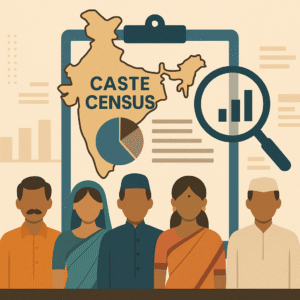
Revisiting the Caste Census: A Political and Social Imperative in Contemporary India

1. Introduction The demand for a caste census has re-emerged as a central issue in Indian politics and public policy, particularly after Bihar’s 2023 caste survey and the Union Government’s approval of caste enumeration in the upcoming national census. While caste enumeration was a regular feature until 1931, its exclusion in later decades reflects India’s

Revisiting the Caste Census: A Political and Social Imperative in Contemporary India Read More »

Minimum Wage

The Politics of Minimum Wage: Balancing Economic Growth and Social Justice

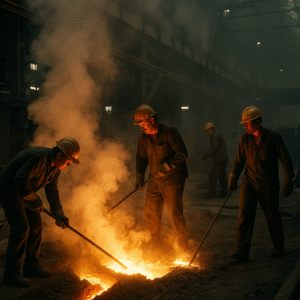
Beyond Numbers — Minimum Wage as a Human Rights Imperative The minimum wage debate is often trapped in abstract economic models, political soundbites, and corporate boardroom discussions. Yet, at its core, it is a deeply human issue — one that speaks to the dignity of labor, the right to a decent life, and the collective

The Politics of Minimum Wage: Balancing Economic Growth and Social Justice Read More »

Child Rights

Child Rights: From Protection to Empowerment — A Global Call to Action

What Are Child Rights? Child rights refer to the fundamental freedoms and entitlements that must be guaranteed to every child by virtue of their humanity. Recognized across various international, regional, and national frameworks, these rights transcend distinctions of nationality, ethnicity, gender, religion, or socio-economic background. They are rooted in the recognition that childhood is a

Child Rights: From Protection to Empowerment — A Global Call to Action Read More »

women empowerment

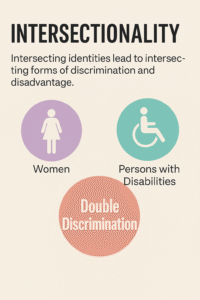
Intersectionality Matters: Women with Disabilities and the Struggle for True Empowerment

Introduction Despite global progress in gender equality and disability rights, women with disabilities remain among the most marginalized and invisible groups worldwide. These women occupy an intersectional space where gender-based discrimination meets ableism, resulting in “double discrimination” that systematically excludes them from empowerment frameworks. If the objective of women empowerment is to create an equitable

Intersectionality Matters: Women with Disabilities and the Struggle for True Empowerment Read More »

Religious Freedom in India: Constitutional Rights and Democratic Prospects

🕊️ Religious Freedom in India India is one of the most religiously diverse countries in the world. From temples and mosques to churches and gurdwaras, faith plays a central role in the lives of millions. But with such diversity comes the need to protect every individual’s right to believe—or not believe—freely and equally. This is

Religious Freedom in India: Constitutional Rights and Democratic Prospects Read More »

Scroll to Top