1. Understanding the Iran Israel Conflict
The Iran Israel conflict stands today as one of the most complex, multi-dimensional geopolitical rivalries in the modern world. What began as an ideological rupture in 1979 has evolved into a confrontation that involves nuclear brinkmanship, proxy warfare across multiple countries, direct military exchanges, and consequences felt in every economy on Earth.
Writing as a practitioner trained in international relations, peace resolution, and human rights law, this article makes no moral judgment against either nation. Rather, it presents verified facts, both nations’ legitimate security concerns, and evidence-based pathways toward a lasting peace. Every event cited below has been cross-checked against multiple authoritative sources, including the UN Security Council, the IAEA, Encyclopaedia Britannica, the Council on Foreign Relations, and recent reporting from April 2026.
Understanding this conflict is not optional for global citizens. The Iran Israel conflict has become, particularly since 2024, a driver of global oil prices, food insecurity, shipping disruption, and geopolitical realignment on a scale not seen since the Cold War. It demands honest, complete, and balanced examination.
2. Historical Roots: From Allies to Adversaries (1948–1979)
A critical and often overlooked dimension of the Iran Israel conflict history is that the two nations were once close strategic partners. Under the Pahlavi dynasty — particularly Shah Mohammad Reza Pahlavi, who ruled until 1979 — Iran and Israel cooperated extensively on intelligence, military training, and energy trade. Iran supplied Israel with oil; Israel assisted Iran in agricultural technology and security infrastructure. Both nations viewed Arab nationalism and Soviet influence as shared threats.
The Iranian Revolution: A Turning Point for the Ages
On February 11, 1979, the Islamic Revolution swept Ayatollah Ruhollah Khomeini to power. Within days, on February 18, 1979, Iran formally severed all diplomatic ties with Israel. The revolutionary government declared Israel an illegitimate, colonial state and adopted openly hostile language, including the declaration that Israel was a “cancerous tumor” that must be eradicated — rhetoric that has persisted under Supreme Leader Ali Khamenei and, following Khamenei’s death in February 2026, under his son Mojtaba Khamenei.
This ideological shift was not merely political — it was existential. From the moment of the revolution, Iran’s government reoriented its foreign policy around opposition to Israel and began constructing a network of allied militant groups across the Middle East, collectively known later as the “Axis of Resistance.”
The Covert Iran-Iraq War Era
In a notable complexity, even after the revolution, covert ties between Israel and Iran briefly continued during the Iran-Iraq War (1980–1988). Israel supplied arms to Iran during this period, calculating that an Iranian victory was preferable to an Iraqi one. This episode illustrates how strategic pragmatism has always run beneath the ideological surface of the conflict.
3. Complete Timeline of the Iran Israel Conflict (1979–2026)
Phase 1: The Proxy War Era (1979–2023)
For four decades following the Islamic Revolution, Iran and Israel fought what analysts call a “shadow war” — through proxies, intelligence operations, targeted assassinations, and cyberattacks, but not directly. This period established the structural architecture of the conflict still visible today.
1979
Islamic Revolution. Iran severs ties with Israel on February 18. Ayatollah Khomeini declares opposition to Israel a pillar of the new state’s ideology. The PLO is given the former Israeli Embassy in Tehran.
1982
Israel invades Lebanon. Iran responds by training, arming, and deploying the Lebanese Shia militia that becomes Hezbollah — Iran’s most powerful proxy force, permanently stationed on Israel’s northern border.
1985–2005
Iran expands its Axis of Resistance, backing Palestinian groups including Hamas in Gaza and Islamic Jihad, in addition to Hezbollah. Israeli-Lebanese conflicts (2006 Lebanon War) involve Iranian-supplied weaponry and intelligence. Iran’s nuclear program, reportedly initiated in the 1980s with covert weapons ambitions, becomes a growing international concern.
2010
The Stuxnet cyberattack — widely attributed to a joint US-Israeli intelligence operation — destroys roughly 1,000 Iranian nuclear centrifuges at the Natanz facility. This marks the first known state-level cyberweapon deployed against a nuclear program.
2015
The Joint Comprehensive Plan of Action (JCPOA) is signed. Iran agrees to freeze its nuclear program in exchange for lifting of international sanctions. Israel, under Prime Minister Benjamin Netanyahu, vocally opposes the deal, arguing it does not permanently eliminate Iran’s nuclear capability.
2018
US President Donald Trump withdraws from the JCPOA. Iran begins systematically violating its terms — enriching uranium beyond permitted limits and restricting IAEA monitoring. The deal effectively collapses.
2020
US drone strike kills IRGC General Qasem Soleimani in Baghdad — the most powerful Iranian military figure since the Revolution, and architect of the Axis of Resistance network. Iran launches retaliatory missile strikes on US bases in Iraq.
October 7, 2023
Hamas launches a coordinated surprise attack on Israel from Gaza, firing at least 3,000 rockets and sending approximately 2,500 militants through the border fence. At least 1,200 Israelis are killed, including 360 at a music festival. This triggers Israel’s military operation in Gaza — and a new phase of Iran-Israel confrontation.
Phase 2: Iran Israel Conflict-Direct Confrontations Begin (2024)
The year 2024 marked an irreversible threshold: for the first time in the 45-year history of the Islamic Republic, Iran and Israel exchanged direct fire on each other’s territory.
December 2023
Israel kills IRGC commander Razi Mousavi in an airstrike in Damascus, Syria — the highest-ranking Iranian military casualty since Soleimani.
February 14, 2024
An Israeli sabotage operation causes explosions on an Iranian natural gas pipeline in western Iran.
April 1, 2024
An Israeli airstrike demolishes Iran’s consulate complex in Damascus, Syria, killing 16 people including two senior Iranian generals. Iran vows a direct response — marking a decisive escalation threshold.
April 13–14, 2024
Iran launches Operation True Promise — the first direct military attack on Israeli territory in the history of the Islamic Republic. Over 300 drones and missiles are fired. A US-led coalition including the UK, France, and Jordan intercepts most projectiles; damage and casualties in Israel are minimal. Israel carries out a limited retaliatory strike near Isfahan, Iran on April 19, signaling a desire to avoid full escalation.
July 31, 2024
Hamas political chief Ismail Haniyeh is assassinated in Tehran by a suspected Israeli strike — a profound humiliation for Iran on its own soil.
September–November 2024
Israel conducts intensive strikes on Hezbollah leadership in Lebanon, killing its secretary-general Hassan Nasrallah and decapitating its senior command. This critically weakens one of Iran’s most important strategic assets.
October 1, 2024
Iran launches approximately 180–200 ballistic missiles at Israel — its second direct attack — in retaliation for Israeli strikes on Hamas and Hezbollah leadership.
October 26, 2024
Israel launches its largest direct strike on Iran, targeting air defense systems and missile production facilities. The strikes destroy nearly all of Iran’s Russian-supplied S-300 air defense systems, leaving Iran’s airspace significantly more vulnerable to future attack.
December 2024
Syria’s President Bashar al-Assad flees, ending his family’s 50-year rule. This critically disrupts Iran’s overland supply corridor from Tehran through Syria to Hezbollah in Lebanon — a strategic catastrophe for the Axis of Resistance.
Phase 3: Iran Israel Conflict-The Twelve-Day War (June 2025)
The Twelve-Day War represented the most intense direct military confrontation between Iran and Israel since the formation of the Islamic Republic. It drew in the United States and became a watershed moment in Middle East history.
May–June 2025
US-Iran nuclear negotiations, mediated through Oman, intensify but ultimately fail. The IAEA reports Iran has accumulated enough enriched uranium to theoretically produce nine nuclear warheads. One day before Israel strikes, the IAEA declares Iran non-compliant with its nuclear obligations.
June 13, 2025
Israel launches a massive surprise attack targeting Iran’s nuclear facilities, military sites, and regime infrastructure. The opening strikes include targeted assassinations of top IRGC commanders, nuclear scientists, and politicians. Drones reportedly pre-positioned inside Iran are deployed. Iran’s air defenses are overwhelmed.
June 13–22, 2025
Iran retaliates with over 550 ballistic missiles and more than 1,000 suicide drones targeting Israeli cities, military sites, and energy infrastructure. Twenty-eight people are killed in Israel. Commercial aviation is massively disrupted. US naval forces (five Arleigh Burke-class destroyers) intercept Iranian attacks.
June 21, 2025
The United States enters the conflict directly, striking three of Iran’s most fortified nuclear sites — Fordow, Natanz, and Isfahan — using munitions that Israel’s arsenal could not penetrate. These deeply buried facilities required US-only precision weaponry.
June 24, 2025
A ceasefire brokered by the United States and Qatar takes effect, ending the Twelve-Day War. Both sides claim victory. Iran signals it may exit the Nuclear Non-Proliferation Treaty. The ceasefire initially holds.
Phase 4: Escalation, Negotiations, and the 2026 Conflict
December 2025 – January 2026
Mass protests erupt across all 31 of Iran’s provinces, driven by economic deterioration and rising inflation. Iran’s government responds with mass arrests — reportedly 21,000 detentions — and significantly increased use of the death penalty.
Early 2026
US-Iran nuclear negotiations stall. Iran is reported to be rebuilding nuclear infrastructure damaged in the June 2025 strikes and has reportedly stockpiled more missiles than before the Twelve-Day War. IAEA inspectors report Iran is rebuilding enrichment capabilities.
February 28, 2026
Following the collapse of further nuclear negotiations and citing Iran’s continued non-compliance, the United States and Israel launch coordinated large-scale airstrikes on Iran, targeting its leadership, nuclear program, military assets, and armed forces. Supreme Leader Ali Khamenei is killed. His son Mojtaba Khamenei is appointed as successor. Iran retaliates by targeting US military bases in the region and energy infrastructure across Gulf Arab states, effectively closing the Strait of Hormuz to most commercial shipping.
March–April 2026
Intensive diplomatic efforts by Pakistan, China, the UN, Qatar, and Oman seek a ceasefire framework. Iran proposes a 10-point peace plan. Multiple ceasefire attempts are violated. As of April 2026, negotiations remain ongoing under a fragile two-week ceasefire agreed on April 7–8, 2026, brokered with Pakistani mediation.
4. The Nuclear Program: The Core Flashpoint
No single issue more fundamentally drives the Iran Israel conflict than Iran’s nuclear program. It is the proximate cause of every major military escalation since 2024 and the central demand in every round of negotiations.
Iran’s Nuclear History
Iran’s nuclear program dates to 1967, when it received its first research reactor under the US “Atoms for Peace” program. The program was initially peaceful and supervised. After 1979, Iran allegedly began a covert weapons-oriented program called the AMAD Project in the 1980s and 1990s, which US intelligence assessments concluded was suspended in 2003. Iran has consistently maintained that its program is entirely for civilian energy purposes.
The JCPOA and Its Collapse
The 2015 JCPOA was the most significant diplomatic achievement in managing the nuclear question. Under it, Iran agreed to freeze enrichment, reduce uranium stockpiles, and allow IAEA inspections in exchange for sanctions relief. The deal’s collapse following the 2018 US withdrawal left a critical vacuum. Iran subsequently began enriching uranium well beyond JCPOA limits — reaching levels sufficient for near-weapons-grade material.
The Current Nuclear Status (2026)
By June 2025, the IAEA reported Iran had sufficient enriched uranium to theoretically produce nine nuclear warheads. The June 2025 US-Israel strikes and subsequent 2026 operations have significantly damaged Iran’s nuclear infrastructure, but analysts, including the IAEA Director-General, note that Iran’s nuclear knowledge cannot be bombed away, and that the regime has demonstrated the will and capacity to rebuild. Iran has signaled potential withdrawal from the Nuclear Non-Proliferation Treaty.
5. How the Iran Israel Conflict Affects the Whole World
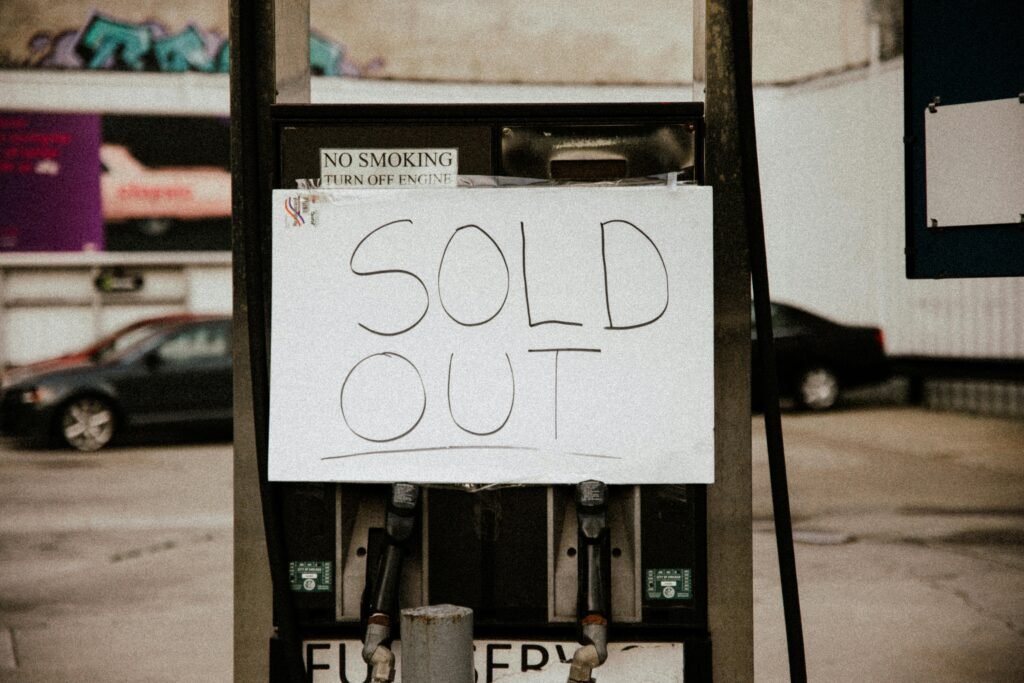

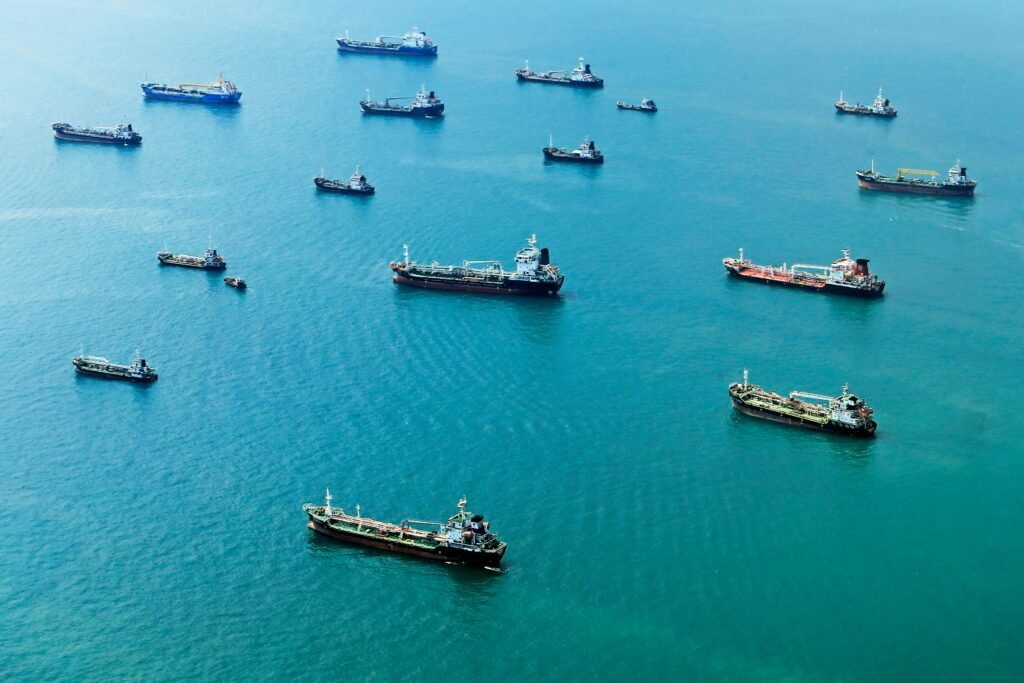
The Iran Israel conflict’s global impact is profound, systemic, and touches every continent. The world is not a spectator in this conflict — it is an involuntary participant.
~20%
of global oil supply transits the Strait of Hormuz
+25%
surge in global oil prices since February 2026 conflict
$120/bbl
Brent crude peak price during peak conflict period
−0.3%
projected global GDP reduction in worst-case scenario (Oxford Economics)
Energy Markets and the Strait of Hormuz
The Strait of Hormuz is the single most critical chokepoint in global energy. Approximately 20 million barrels per day of crude oil and petroleum products — roughly one-fifth of global consumption — normally transit this narrow passage. Since Iran’s retaliatory closure of the strait in the 2026 conflict, commercial shipping has reduced to near standstill, triggering an energy crisis with global ramifications. European gas prices spiked 20% on a single morning. Goldman Sachs warned of oil prices reaching $100+ per barrel if disruptions persist. The World Economic Forum has described the conflict as generating “a global surcharge through shipping costs and insurance” that ripples into every supply chain on Earth.
Impact on Developing Nations and Food Security
The Middle East is a major exporter of fertilizers and petrochemicals essential to global agriculture. Disruption of these supply chains — compounded by rising energy costs — threatens food security in import-dependent developing nations. Djibouti’s finance minister described the situation as potentially bringing “severe economic consequences for developing countries.” Small island states, sub-Saharan African nations, and South Asian economies face disproportionate harm from both higher fuel prices and reduced fertilizer availability.
Impact on Asia: China, India, Japan, South Korea
Asia is far more exposed to Gulf energy disruption than Europe or North America. China, which imports approximately half its oil through the Strait of Hormuz, faces significant economic risk. India, Japan, and South Korea — all heavily import-dependent — face immediate inflation and growth headwinds. Analysts at J.P. Morgan warned that if Brent prices remain elevated, global GDP growth for the first half of 2026 could be depressed by an annualized rate of 0.6%.
Impact on Europe
European vulnerability lies primarily in LNG — liquefied natural gas. If Strait of Hormuz flows are curtailed, Europe is forced to compete with Asian buyers for flexible LNG cargoes at elevated spot prices, echoing the 2021–2023 energy crisis. Europe entered 2026 with gas storage levels significantly below recent years, amplifying the risk. European industrial competitiveness and household energy affordability are both at stake.
Humanitarian Consequences
Beyond economics, the conflict has generated severe humanitarian consequences. Civilian populations in Iran, Israel, Lebanon, Yemen, Iraq, and Gulf Arab states have all suffered casualties from strikes and retaliatory attacks. Mass displacement, destruction of civilian infrastructure, and economic collapse driven by sanctions and conflict are producing a humanitarian emergency that international human rights organizations continue to document.
🌍 Global Ripple Effects at a Glance
Higher oil prices drive inflation worldwide. Strait of Hormuz closure disrupts 20% of global oil supply. LNG disruption threatens Europe’s heating and industrial capacity. Fertilizer shortages endanger agricultural output in developing nations. Aviation, shipping, and insurance costs rise globally. Investment confidence in the region — and in global markets — weakens.
6. Iran’s Point of View
A balanced understanding of the Iran Israel conflict requires honest engagement with Iran’s perspective as articulated by its government, intellectuals, and citizens. These are presented here as Iran’s stated positions, not as the editorial endorsement of RightsRecall.
🇮🇷 Iran’s Core Arguments
Iran frames its posture toward Israel through multiple overlapping lenses: ideological, legal, historical, and security-based.
Ideological and Solidarity Argument
Iran’s revolutionary ideology, rooted in Ayatollah Khomeini’s reading of political Islam, holds that the displacement of Palestinians constitutes a historical injustice that Muslim nations are obligated to oppose. Iran positions its support for Palestinian armed groups as resistance to occupation rather than terrorism. This narrative resonates with segments of populations across the Muslim world regardless of whether they support the Iranian government.
Sovereignty and the Nuclear Program
Iran consistently argues that its nuclear program is a legal, sovereign right under the Nuclear Non-Proliferation Treaty, which permits civilian nuclear energy. Iranian officials point out that Israel itself is believed to possess nuclear weapons — estimated at 80–90 warheads — without being a signatory to the NPT or subject to IAEA inspections. Iran characterizes Western pressure on its nuclear program as a double standard driven by geopolitical interests rather than genuine non-proliferation concerns.
Security Environment
Iran notes that it is surrounded by nations hosting US military bases, that it has experienced regime-change operations backed by Western powers (including the CIA-backed 1953 coup that ousted Prime Minister Mossadegh), and that Israeli intelligence operations have conducted targeted assassinations of Iranian scientists and military officers on Iranian soil for over a decade. From Tehran’s perspective, its missile program, proxy network, and nuclear program are rational deterrence tools in a genuinely hostile strategic environment.
Economic Grievances
Iran argues that decades of US-led sanctions have constituted economic warfare against Iranian civilians rather than its government. Persistent inflation, currency collapse, and unemployment driven by sanctions have produced immense civilian suffering — a situation Iran’s leadership frames as an injustice that itself demands a political resolution.
7. Israel’s Point of View
Israel’s posture toward Iran is equally rooted in deeply held, legitimate security concerns that must be understood to appreciate the full dimensions of the Iran Israel conflict.
🇮🇱 Israel’s Core Arguments
Israel views Iran’s behavior — nuclear ambitions, proxy armies, explicit calls for its destruction — as an existential threat requiring proactive military and diplomatic action.
Existential Threat Doctrine
Israeli leaders — across the political spectrum — consistently characterize a nuclear-armed Iran as an existential threat to the State of Israel. This is not merely political rhetoric: Iran’s leadership has repeatedly stated in explicit terms that Israel should not exist. When a government with nuclear ambitions articulates the desire for another state’s elimination, Israel’s security doctrine holds that waiting for that threat to fully materialize is not an acceptable option. This doctrine of preemptive action is enshrined in Israeli strategic thought.
The Proxy Threat
For decades, Israel has faced rockets, attacks, and terrorist operations funded, armed, and directed by Iran through Hezbollah in Lebanon, Hamas in Gaza, the Houthis in Yemen, and various Iraqi militias. These are not theoretical threats — they have produced thousands of Israeli civilian casualties over decades and required massive military expenditure. Israel argues that dismantling this proxy network is a legitimate act of self-defense, not aggression.
Nuclear Non-Proliferation
Israel contends that a nuclear-armed Iran would fundamentally alter the balance of power in the Middle East and trigger a regional nuclear arms race, with Saudi Arabia, Egypt, and Turkey potentially pursuing their own nuclear capabilities in response. This, in Israel’s framing, would make the entire region — and by extension the world — dramatically less safe.
October 7 and the Right to Self-Defence
The October 7, 2023 Hamas attack — which Iran backed politically and provided material support for through years of arming Hamas — produced the single deadliest day for Jewish people since the Holocaust. Israel’s subsequent military campaign in Gaza and its strikes on Iranian assets are framed by Israel as the exercise of a nation’s fundamental right to defend its citizens from further atrocities and to eliminate the infrastructure that made those atrocities possible.
8. Measures to Resolve the Iran Israel Conflict
Experts in international relations, peace resolution, and human rights, observe that no military solution has eliminated the underlying drivers of this conflict — and none can. Every round of strikes has been followed by rebuilding, rearmament, or escalation. Durable peace requires addressing structural causes. The following evidence-based measures represent the considered consensus of international scholars, diplomats, and peace practitioners.
8.1 Reviving and Strengthening the Nuclear Framework
Multilateral Nuclear Deal (JCPOA 2.0)
A new, more durable nuclear agreement must include stricter verification mechanisms, longer sunset clauses, and compliance-based sanction relief — learning directly from the JCPOA’s weaknesses. China, Russia, the EU, and the US must all be co-guarantors.
IAEA Strengthened Mandate
Iran’s return to full IAEA inspections — including the Additional Protocol — must be a non-negotiable precondition for sanctions relief, with automatic snap-back mechanisms if violations occur. The IAEA must be resourced and empowered to inspect on short notice.
Regional Nuclear-Weapons-Free Zone
A long-proposed Middle East Nuclear-Weapons-Free Zone (MENWFZ) — which would require Israel to declare or cap its presumed nuclear arsenal under international inspection — would remove one of Iran’s most powerful arguments. This requires genuine multilateral commitment, including from the P5 powers.
8.2 Direct and Indirect Diplomatic Engagement
Sustained Back-Channel Diplomacy
Oman has historically served as a trusted intermediary between Iran and the US. Pakistan, Switzerland, and Qatar have demonstrated mediation capacity in 2026. Institutionalizing these channels — rather than relying on ad-hoc crisis diplomacy — is essential.
Confidence-Building Measures
Graduated, verifiable confidence-building measures — beginning with prisoner exchanges, ceasefires on specific fronts, and joint IAEA inspections — can build trust incrementally before tackling core political disagreements. The Helsinki Process offers a historical model.
Track II Diplomacy
Informal dialogue between Iranian and Israeli academics, business leaders, civil society organizations, and former officials can prepare the political and public groundwork for eventual government-to-government engagement. Several such initiatives operated covertly before the 2025 escalation.
8.3 Addressing the Palestinian Question
The Iran Israel conflict cannot be durably resolved in isolation from the Israeli-Palestinian conflict. Iran’s stated justification for much of its posture toward Israel — including its support for Hamas and Hezbollah — is the Palestinian cause. A credible pathway toward Palestinian statehood, consistent with UN Security Council Resolution 242 and subsequent agreements, would remove one of Iran’s most powerful mobilizing narratives.
This requires a revived Israeli-Palestinian peace process, guaranteed by major powers, with genuine commitment to a two-state solution and the security guarantees both peoples need. It is a necessary, though not sufficient, condition for broader Iran-Israel normalization.
8.4 Regional Security Architecture
Gulf Security Dialogue
A permanent regional security dialogue — involving Iran, the Gulf Arab states, Turkey, and with UN backing — would institutionalize crisis communication and conflict prevention mechanisms. The Abraham Accords (2020) demonstrated that Arab-Israeli normalization is possible; a wider framework including Iran is the next horizon.
Proxy Force Demobilization
Negotiated, internationally supervised demobilization of non-state armed groups — Hezbollah, Houthi forces, and Iraqi militias — with integration into national armed forces where feasible, must be part of any comprehensive peace framework. Lebanon’s sovereignty and stability depend on it.
Security Guarantees for Iran
Iran’s security concerns — including regime survival and sovereignty — must be addressed in any lasting deal. This means formal, legal commitments by the US and others not to pursue regime change, in exchange for Iran’s compliance with international norms. Credible mutual security guarantees are foundational to any durable arrangement.
8.5 Economic Normalization
Sanctions relief, tied to verifiable behavioral change, must be credible and sustained. The failure of the JCPOA was partly caused by the uncertainty created when the US unilaterally withdrew. Any future economic normalization framework requires bipartisan US commitment, multilateral guarantees, and a phased, verifiable implementation mechanism. Iran’s reintegration into the global economy — including oil markets and international banking — would create powerful constituencies within Iran for continued compliance and moderation.
8.6 Human Rights and Civil Society
International human rights bodies must continue independently documenting violations by all parties — including civilian casualties from Israeli strikes in Iran, Gaza, and Lebanon, and Iran’s documented suppression of domestic protesters and use of the death penalty. A peace process that ignores human rights will not produce durable peace. Mechanisms for accountability and transitional justice — drawn from comparable post-conflict processes in Northern Ireland, South Africa, and the Balkans — must be incorporated into any comprehensive settlement.
☮️ The Expert Consensus on Peace
Across the spectrum of international relations scholarship, the consensus is clear: military action can degrade capabilities, but it cannot resolve political conflicts rooted in ideology, security fears, and competing nationalisms. Every military option in this conflict has a day-after problem — and the day-after problem grows worse with each escalation. The path forward lies in sustained, multilateral, inclusive diplomacy backed by credible security guarantees for all parties.
9. Conclusion
The Iran Israel conflict is one of the defining geopolitical crises of the 21st century. Its roots are deep, its stakes are existential for the countries directly involved, and its consequences are global in their reach. From oil prices in Mumbai to fertilizer costs in Lagos, from LNG markets in Tokyo to political calculations in Washington and Brussels — this conflict shapes the world we all inhabit.
Both Iran and Israel bring legitimate — if incompatible — security concerns, historical grievances, and ideological commitments to this confrontation. Any analysis that dismisses either side’s concerns entirely will produce prescriptions that cannot succeed. Durable peace requires that both nations’ fundamental security interests be addressed: Israel’s right to exist in security, and Iran’s right to sovereignty and development free from foreign interference.
The measures outlined above — nuclear diplomacy, regional security architecture, resolution of the Palestinian question, economic normalization, and human rights accountability — do not represent idealism. They represent the hard-won lessons of every major conflict resolution process of the past century. The same principles that ended the Cold War, the Irish conflict, and apartheid-era South Africa apply here. They require political will, sustained engagement, credible guarantees, and the courage to choose dialogue over escalation.
For the people of Iran and Israel — and for the billions across the world impacted by this conflict — that courage cannot come soon enough.
For more articles on human rights and Iran Israel conflict, Strait of Hormuz, nuclear deal, etc., follow RightsRecall.com
Related posts:
 Rights of People to Exist: Meaning, Theories, Discourse and International Legal Frameworks
 Ceasefire: Legal and Political Dimensions in International Law and International Relations
 The Fragile Peace: A History of India Pakistan Ceasefires (1947-2025)
 The Right to Freedom of Religion: Global Significance, Laws, and Future Challenges
 Who Governs in the Age of Code? Exploring Algorithmic Sovereignty
 International Peace and Security Under the UN Charter: Promises, Progress, and the Path Forward